On this page4 sections
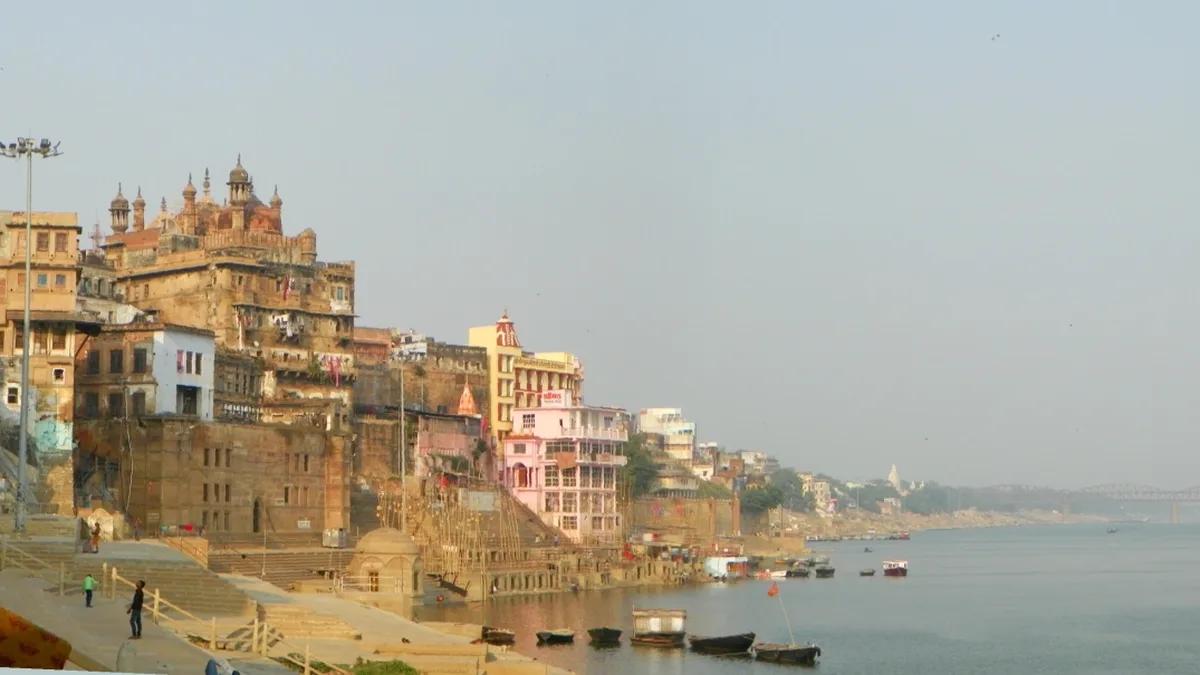
Varanasi’s run on into the Ganga, Deity page on Tirth itself, since the river does not hold one level and a stair gives a bather a way in, high water or low.
Behind the ghat meaning sits an older word. Hindi gave it to English, and the Hindi word goes back to the Sanskrit ghatta. The Monier-Williams dictionary has that as a landing place, a quay, a bathing place.
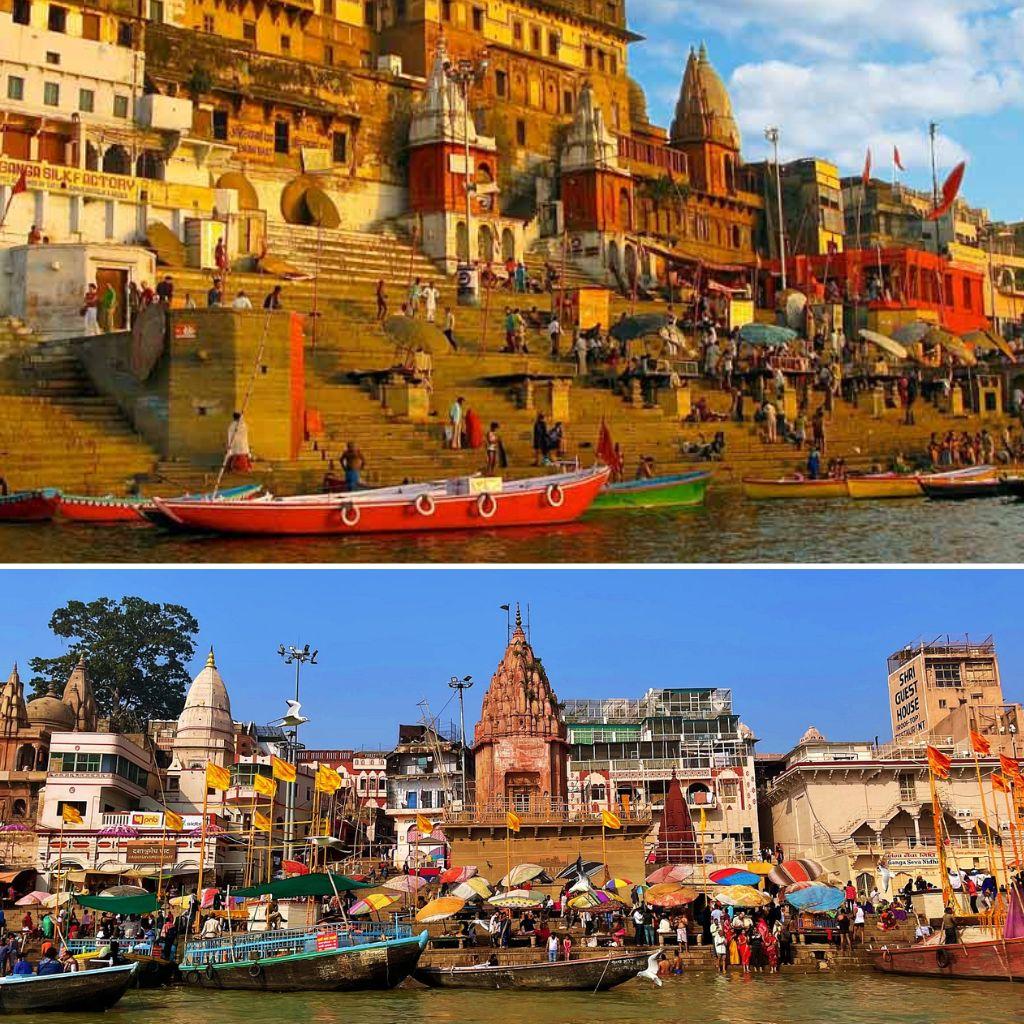
Most people meet the word first in Varanasi. The riverfront is ghat after ghat. There the steps carry more than bathers, with families coming down them for puja and, at two of the ghats, for the last rites. For the rest of the city, from its temples to getting there, see Varanasi on Tirth, Destination on Tirth.
In short
Behind the ghat meaning sits an older word. Hindi gave it to English, and the Hindi word goes back to the Sanskrit ghatta. The Monier-Williams dictionary has that as a landing place, a quay, a bathing place. Most people meet the word first in Varanasi.
Why do the steps keep going down into the river?
The river moves. It rises and falls with the seasons, and a bank that meets the water in one of them can be left standing well above it in the next, or end up beneath it.
Steps solve that neatly. Whatever the level, one of them is at the waterline. A bather still gets in.
That is also why the flights run so long. A short stair would meet the river in one season and miss it in the next. A long one finds the water in the dry months, when it sits low, and again in the rains, when it has climbed the steps.
Count them along the Varanasi riverfront and you land anywhere from 84 to 88, depending on who is counting. The Varanasi district administration puts its list at 88, while many travel guides settle on 84.
Come the monsoon, the water can top the steps altogether. News reports from Varanasi in July 2023 had the Ganga in flood over the ghats, the steps under water, boating stopped and the evening aarti venue moved. All India Radio carried one such report that month, citing the Central Water Commission.
When the river falls back, the steps come out of it again, and with them the way down.
So one ghat can look like several over a year. In the dry months it is a long stair with the water far below; in the rains the river is up the steps, and in a flood like that one there is no stair to see at all. The step a bather uses in the dry months may sit under the river by the monsoon.
If your parents are travelling with you in the rains, we would go by the local administration’s notices on boats and bathing rather than by the photographs (the steps in those pictures could well be under the river that week).
What do families go down the ghats of Varanasi for?
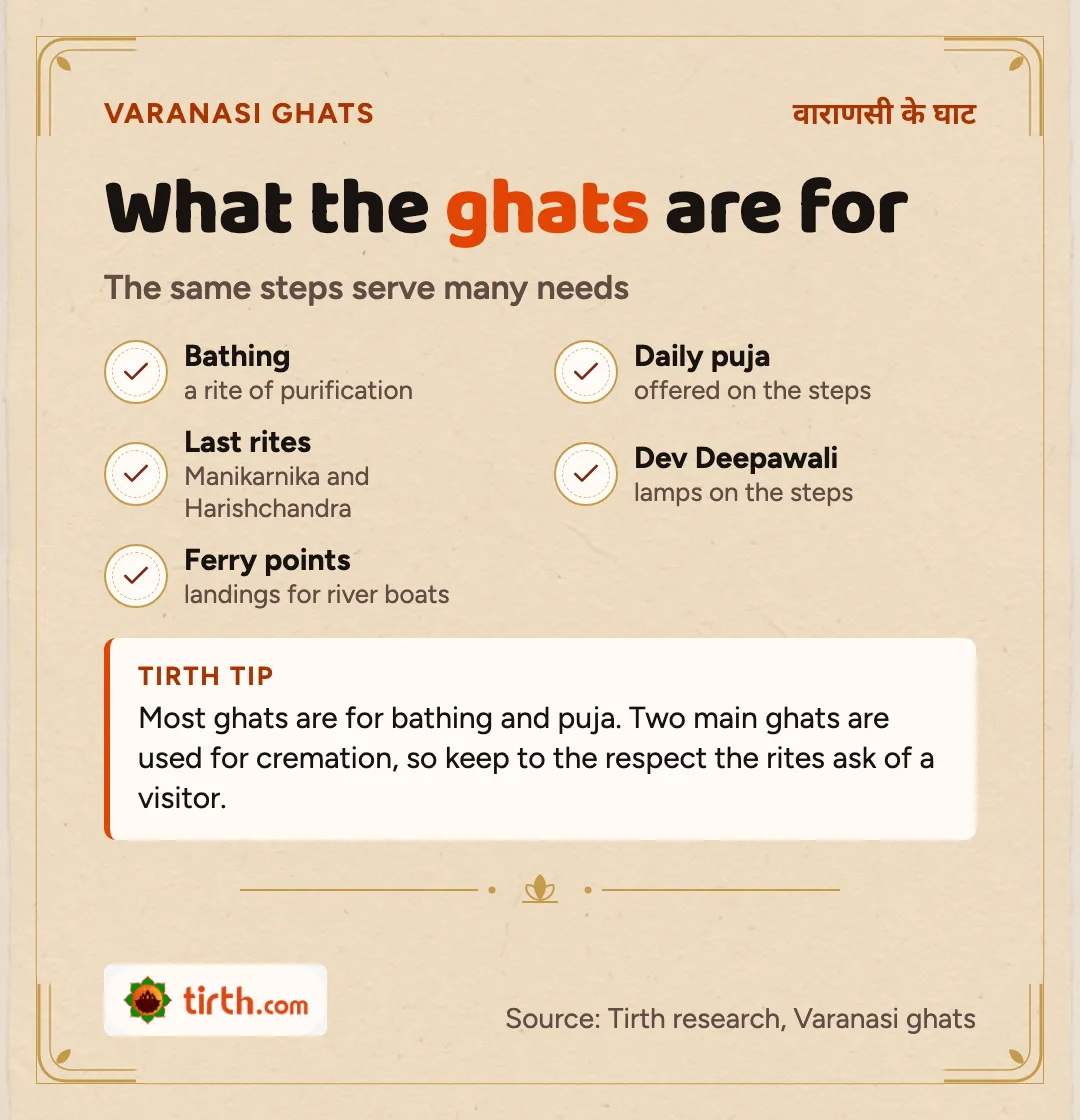
Bathing and puja, mostly. That is what the greater part of Varanasi’s ghats are for, with the bath taken as a rite of purification and the daily puja offered on the same steps.
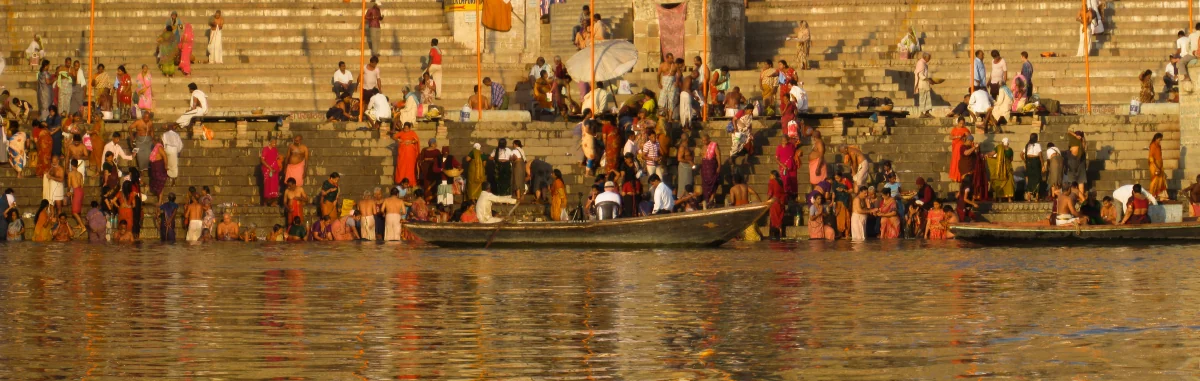
On festival nights those steps hold lamps as well. Dev Deepawali is one such night, and its date, year by year, is on the Tirth Spiritual Calendar, Spiritual Calendar on Tirth. The story of why the riverfront is lit that night is told in the lamps of Kashi on Kartik Purnima. Some ghats are plain ferry points, landings for the boats that work the river and little else.
The old word had room for that use as well. Among the senses Monier-Williams gives for ghatta are steps by a river-side and a ferry.
Two main ghats are used for the last rites. Manikarnika and Harishchandra are Varanasi’s two main cremation ghats, and of the pair Manikarnika is the larger and the more important.
Families bring their dead to these ghats for the last rites. The ashes are given to Maa Ganga. Respect for the rites under way, and no interference with them, is what the ghat’s own page, Manikarnika Ghat, asks of a visitor. Tirth also has a separate explainer on what moksha means.
Dashashwamedh Ghat holds the daily evening Ganga Aarti. Its page on Tirth names the evening as the best time to be there, which is when the aarti is offered to Maa Ganga.
Some ghats carry their story in the name.
| Ghat | What its name points to | On Tirth |
|---|---|---|
| Assi | The river Assi, which met the Ganga at the southern end of the ghats | Assi Ghat |
| Dashashwamedh | Ten Ashwamedha sacrifices Bhagwan Brahma is said to have performed here; the ghat of the evening Ganga Aarti | Dashashwamedh Ghat |
| Manikarnika | An earring of Maa Parvati’s said to have fallen here; the main cremation ghat | Manikarnika Ghat |
Frequently asked questions
A flight of steps, or sometimes a bare landing, on a river or pond bank that lets people walk down to the water. English has the word through Hindi, from the Sanskrit ghatta: a landing place or bathing place.
Anywhere from 84 to 88. Go by the Varanasi district administration and it is 88; go by many travel guides and it is 84.
Two main ones: Manikarnika, the larger and the more important, and Harishchandra. Ashes from the cremations are given to Maa Ganga.
It is a rite of purification for families, and the daily puja is offered on the same steps where they bathe.
In the monsoon the Ganga rises high enough to cover the steps. In July 2023, by reports from Varanasi, the ghats were under water, boating had stopped and the evening aarti venue had moved.
The same as in English: steps or a landing on a river or pond bank, going down to the water. The Hindi word comes from the Sanskrit ghatta, which Monier-Williams glosses as a quay or landing place, a bathing place, steps by a river-side and a ferry.
Continue on Tirth
- Varanasi yatra packages if you want to see the ghats with the travel and stay arranged.
- Varanasi trip guide for planning the days around the riverfront.
- Book a puja, Pujas on Tirth with a Pandit on Tirth.
- Dashashwamedh Ghat, the ghat of the evening Ganga Aarti.