On this page8 sections
- What does the Upanishad’s prayer for light ask the lamp for?
- How does a windless lamp show a steady mind in the Gita?
- Why is the lamp circled before the deity in arti?
- Did Ayodhya really light diyas for Bhagwan Ram?
- Why does the Dhanteras lamp face south, towards Yama Dev?
- Which diya should you light at home?
- Frequently asked questions
- Continue on Tirth
- Sources and review
The significance of lighting a lamp is simple: nothing else on the altar works this hard. A small diya holds a prayer and shows you what a still mind looks like, then it goes round the deity in arti, and later that same evening you find it at the door, waiting to welcome someone in.
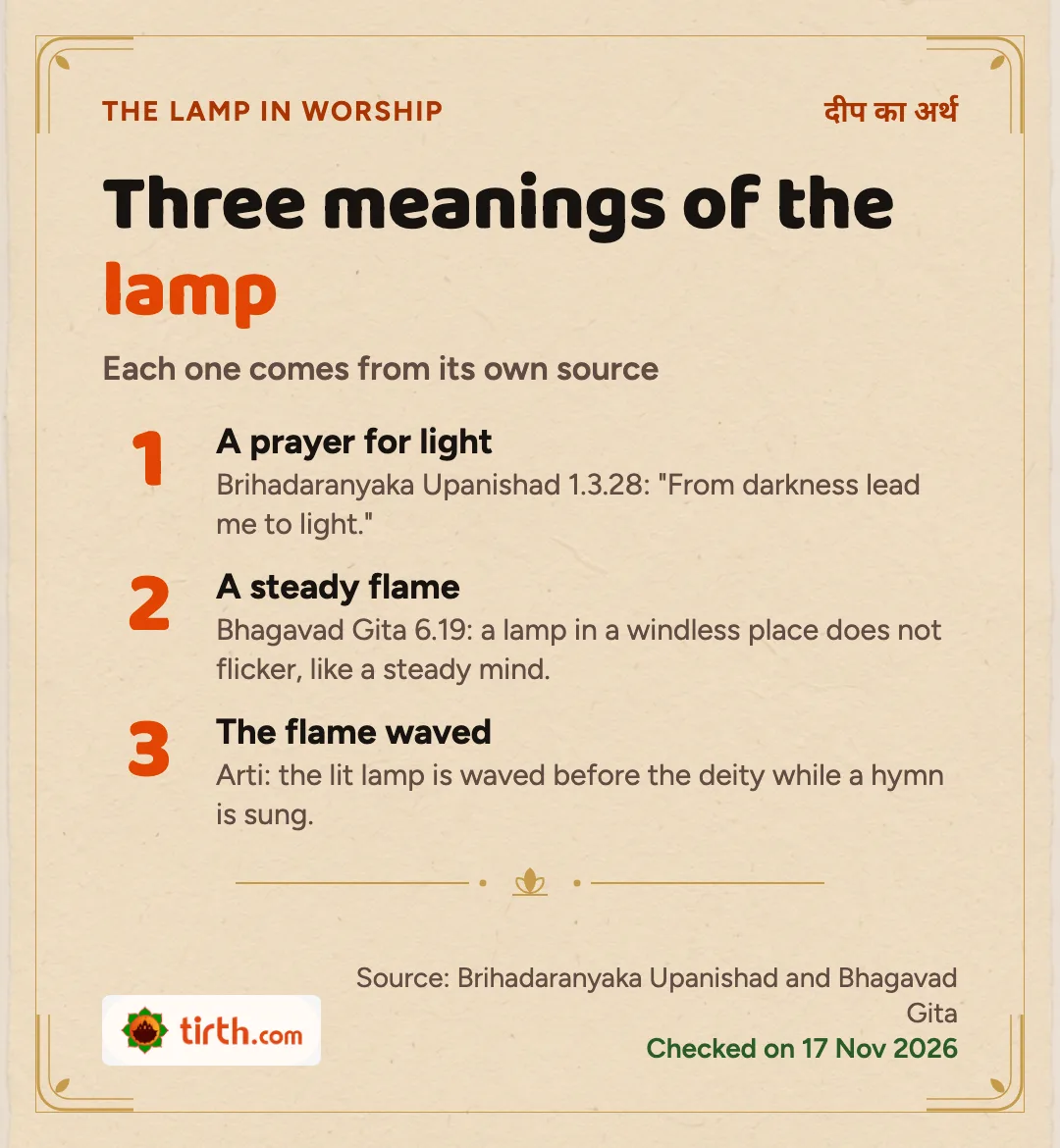
So take one diya and follow it, from inside the house out to the street. Each of those jobs has a text or a custom behind it. The flame’s story begins long before Diwali, in an Upanishad that has no lamp in it at all.
In short
A small diya holds a prayer and shows you what a still mind looks like, then it goes round the deity in arti, and later that same evening you find it at the door, waiting to welcome someone in. So take one diya and follow it, from inside the house out to the street.
What does the Upanishad’s prayer for light ask the lamp for?
First, the wish. It sits in the Brihadaranyaka Upanishad at 1.3.28. It is one of three short lines called the Pavamana mantras.
Swami Madhavananda, in the translation published by Advaita Ashrama in Kolkata, renders it “From darkness lead me to light”. Either side of it stand two more requests: from evil to good, and from death to immortality.
The Upanishad then glosses its own words. In Madhavananda’s English darkness is death and light is immortality, so the middle line and the last one are a single request put in two different pictures.
All of this belongs to a Vedic sacrifice. The Prastotr sings the Pavamana hymns of the Saman there, and the sacrificer asks for a boon.
The mantra names no lamp. A household diya takes that same wish.
How does a windless lamp show a steady mind in the Gita?
Steadiness is exactly where the Bhagavad Gita takes up the flame. In the sixth chapter Bhagwan Krishna is telling Arjuna about the disciplined mind in meditation. At verse 19 he reaches for a lamp.
Put plainly in Tirth’s rendering, the yogi whose mind is controlled and who practises yoga on the Self is likened to a lamp in a windless spot. It does not flicker.
On a windy balcony you may have watched it happen.
The flame leaps about. Then a palm goes round the diya and it settles. Read that way, the gusts are everything that pulls at your thoughts, and the flame is your attention, held still once the wind is kept off.
A family picks up exactly this quiet flame and walks it over to the deity.
Why is the lamp circled before the deity in arti?
In arti the flame is offered to the deity.
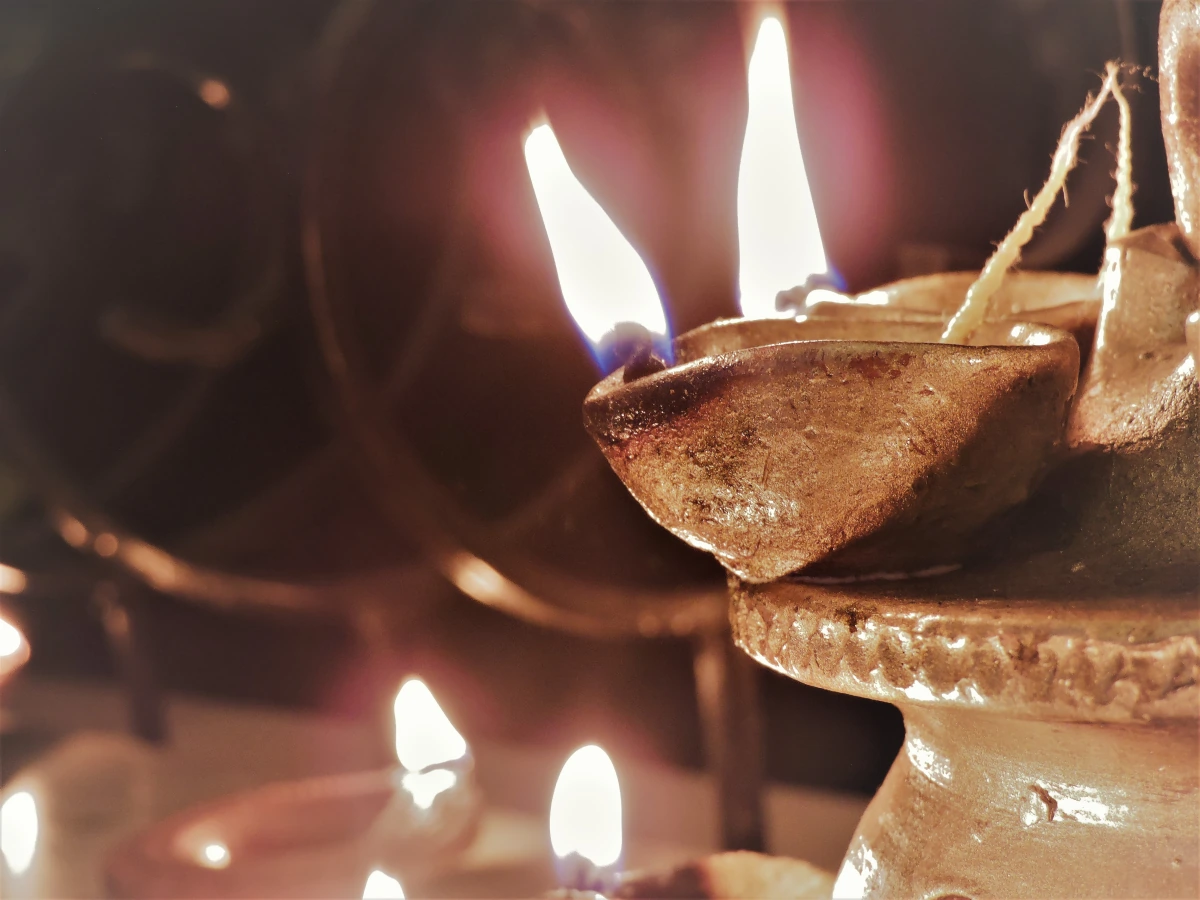
Arti (from the Sanskrit aratrika) is the waving of lit lamps before the image of a deity while a prayer or hymn is sung. Jains keep it as well as Hindus, in temple worship and home worship alike. As it is commonly done, the lamp moves clockwise, three rounds and sometimes more, with ghee or camphor for fuel.
The words sung over that flame are texts of their own (Tirth gives the Om Jai Jagdish Hare aarti and the Ganesh aarti a page each).
Once arti is over, the flame has one more place to go, and that is the doorstep. On Diwali the doorstep lamp comes with a widely told story, that Ayodhya lit its streets for Bhagwan Ram’s return, so it is worth opening Valmiki’s own account of that welcome first.
Did Ayodhya really light diyas for Bhagwan Ram?
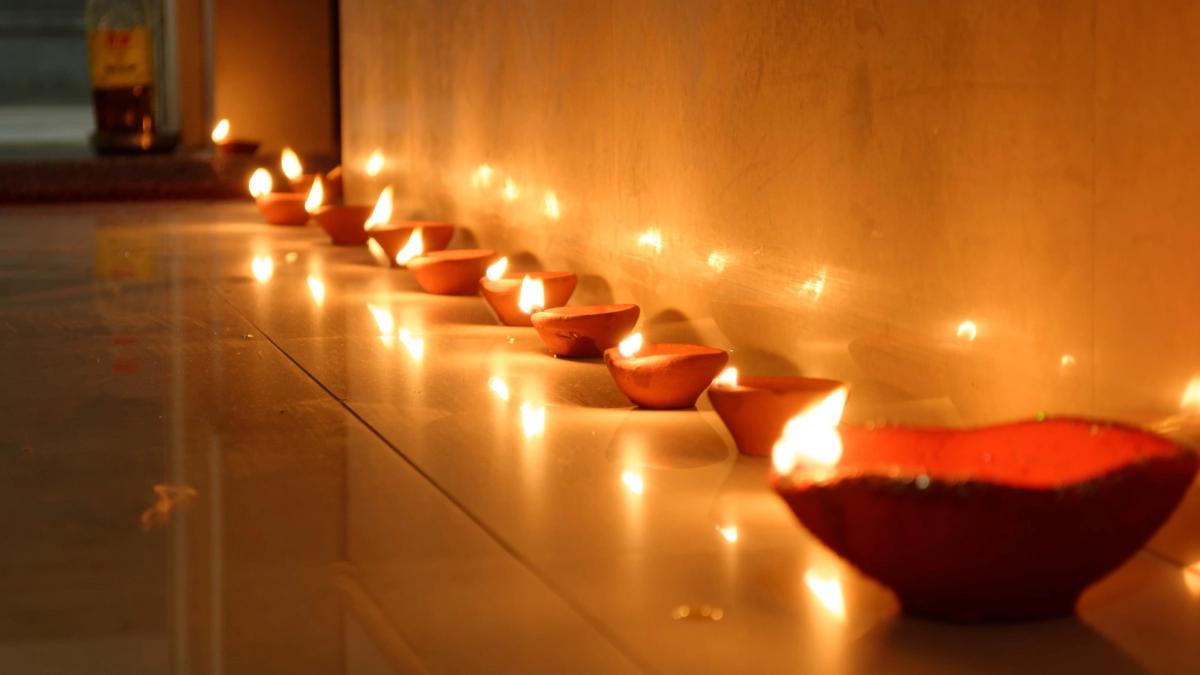
Diwali comes from the Sanskrit Deepavali, dipa (lamp) joined to avali (row), so the name of the festival means a row of lamps.
Open the Valmiki Ramayana at the Yuddha Kanda, sarga 127, where Ayodhya, Destination on Tirth gets ready for him. Bharat hears that his brother is on his way and gives Shatrughna his orders. Men of good conduct are to worship the family deities and the shrines of the city with sweet-smelling garlands and with music.
Flags rise in the streets of Ayodhya and the roadside houses are decorated.
The sarga mentions no lamp.
That is the welcome sarga only. Diwali picked up the picture of a lamplit Ayodhya from later tradition. We would still light every lamp in the row, and we would also like a reader to know which part of the picture is Valmiki’s and which part grew up around it afterwards.
Those lamps outside the house are waiting for a second guest too. On Diwali, on the new-moon night, small earthenware diyas go out in front of homes and temples to welcome Maa Lakshmi. Which is also the night of Maha Lakshmi Puja. Two pages carry the rest of the festival, what Diwali means and our Diwali festival guide.
One lamp that week is meant for someone else altogether, though.
Why does the Dhanteras lamp face south, towards Yama Dev?
On Dhanteras, the lamp many families set out after dark is turned south. South belongs to Yama Dev. This is the Yama Deepam. The prayer said with it asks that nobody in the house should die an untimely death (akal mrityu).
It is the same little flame as before.
The Yama Deepam is a household custom. The window for it is not the same in every panchang either. Your city’s time is on the Tirth Spiritual Calendar, Spiritual Calendar on Tirth, or your family Pandit will know (and the rest of the festival waits in Dhanteras and the Yama Deepam).
From the threshold the flame comes back indoors, to the lamp you light yourself.
Which diya should you light at home?
None of the texts above names a kind of diya for the home.
The oil and the wick fall under home practice, so ask your family Pandit or Purohit about those. If you are taking over the lamp from parents who always lit it themselves, ask them how they did it. They will have opinions.
For another night’s story, read Kartik Purnima and the lamps of Kashi.
Frequently asked questions
A lit diya lets you see the prayer. Being led from darkness to light is what the Brihadaranyaka Upanishad asks for, and in arti a flame of that kind goes to the deity as an offering.
A mind held steady. In Bhagavad Gita 6.19 Bhagwan Krishna says a yogi’s controlled mind in meditation is like a lamp that does not flicker in a place without wind.
Deepavali means a row of lights. Diyas go outside homes and temples on the new-moon night to welcome Maa Lakshmi. The welcome for Bhagwan Ram in Yuddha Kanda sarga 127 has flags, garlands and flowers but no lamps. The picture of lit streets for his return comes from later tradition.
In Swami Madhavananda’s English it reads “From darkness lead me to light”, the middle line of Brihadaranyaka Upanishad 1.3.28. A little further on the same passage glosses darkness as death and light as immortality.
A diya is a small oil lamp made of earthenware. For arti, ghee or camphor burns in the lamp, and someone waves it clockwise before the deity as a hymn is sung.
Called the Yama Deepam, it goes outside after dark facing south, and the prayer with it asks Yama Dev to keep untimely death away. Panchangs do not agree on its time, so check the Tirth Spiritual Calendar for your city.
Continue on Tirth
- Tirth Spiritual Calendar, Spiritual Calendar on Tirth, every festival’s tithi and timings for your city, each and every year
- Diwali festival guide, the whole festival and how families keep it
- Dhanteras and the Yama Deepam, the lamp at the threshold in full
- Kartik Purnima and the lamps of Kashi, the story of Kartik Purnima at Kashi