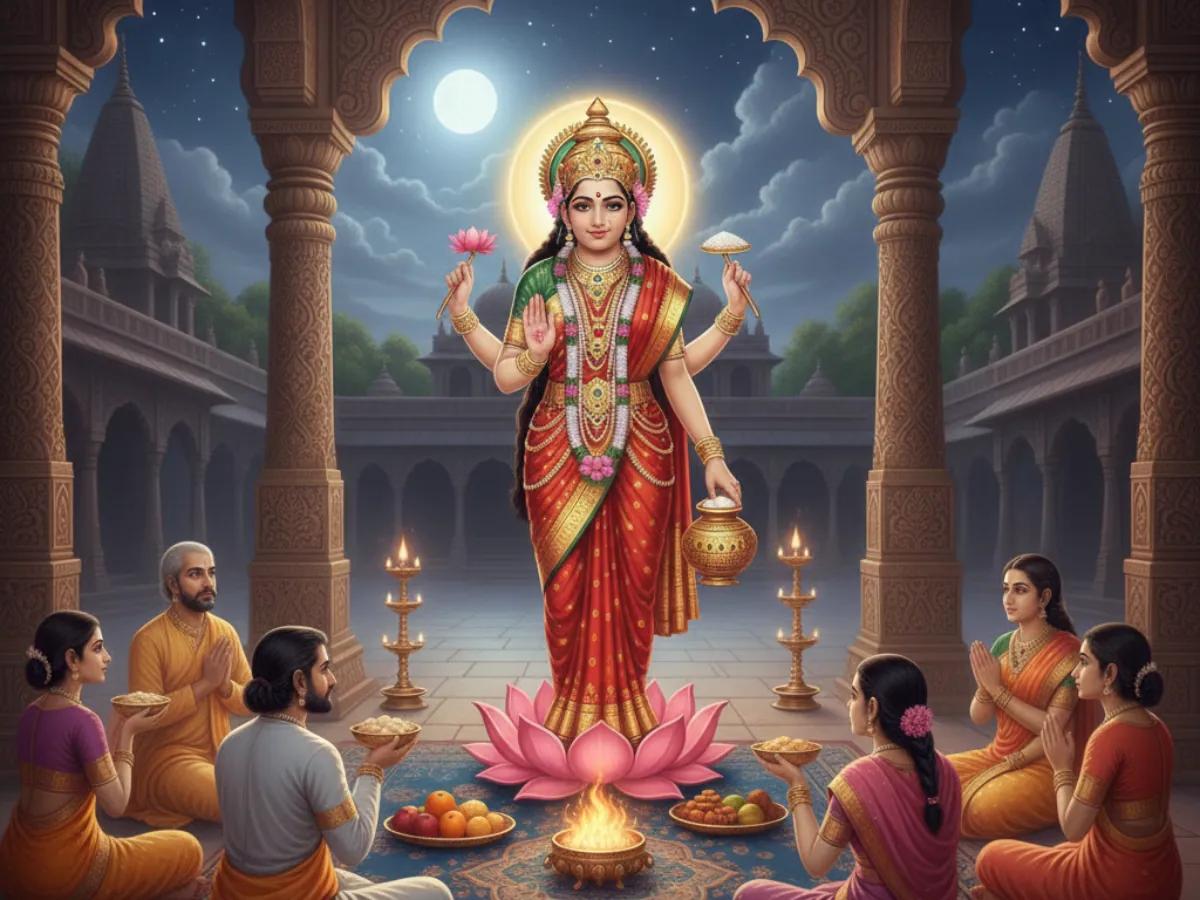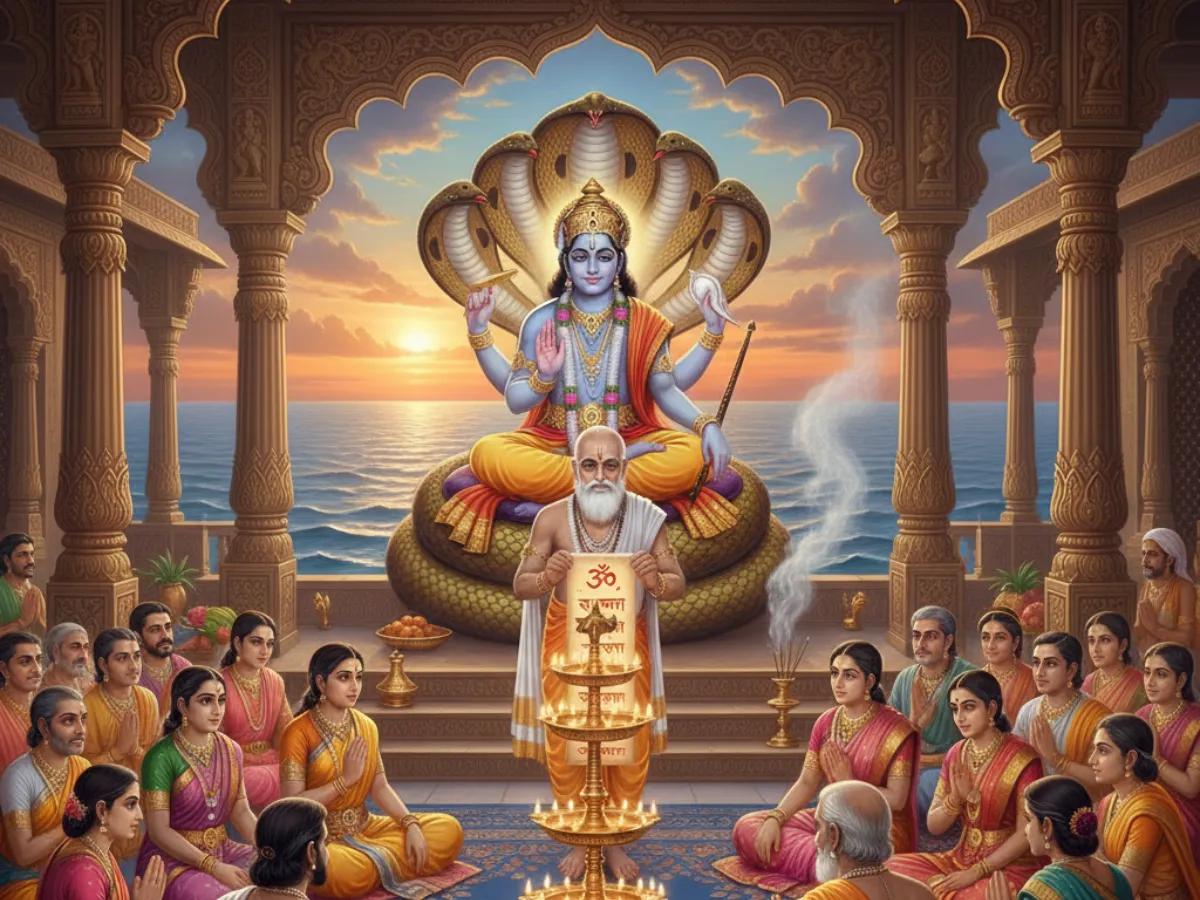
If you’ve ever whispered the name Narayan, you know there’s a peace in it soft, endless, like water touching stone. Lord Vishnu, the preserver, protector, the one who holds the universe steady when everything else trembles in his aspect as Narayan, becomes the still heart of creation.
The Narayan mantras aren’t just chants; they’re a calling home. They open something in you a space where blessings, wisdom, and calm start to feel like your natural state again.
Sacred Narayan Mantras
1. The Devotional Invocation
Om Namo Narayan
Shri Man Narayan Narayan Hari Hari
Shri Krishna Govind Hare Murare
Hey Nath Narayan Vasudevay
Meaning:
O beloved Lord Krishna, ender of all sorrow grant me your mercy. Wash away my faults, bless me with unwavering devotion, and protect this fragile life of mine, O Narayan Vasudeva.
This mantra is often chanted when life feels tangled a cry for both humility and guidance.
2. The Mantra of Surrender
Krishnaya Vasudevaya Haraye Paramatmane
Pranat Klesh Nashaya Govindaya Namo Namah
Meaning:
O Krishna, O Vasudeva, Supreme Soul the very thought of you dissolves all conflict. I bow again and again to Govinda, the peace beneath all burdens.
Each syllable is a soft undoing of ego, of resistance, of fear.
3. Narayan Gayatri Mantra
Narayanaya Vidmahe
Vasudevaya Dheemahi
Tanno Vishnuh Prachodayat
Meaning:
We meditate upon Lord Narayan, the eternal truth, the all pervading self. May that sacred presence awaken our understanding and guide us toward light.
This one is pure meditation steady, ancient, humbling.
4. Dhanvantari Narayan Mantra (Healing and Protection)
Om Namo Bhagavate Mahasudarshanay Vasudevay Dhanvantarye
Amritkalash Hastay Sarvabhay Vinashay Sarvaroganivaranay Trilokapathay Triloknathay
Shri Mahavishnuswaroop Shri Dhanwantari Swaroop
Shri Shri Shri Aushadhchakra Narayanay Namah.

Om Namo Bhagavate Dhanvantarye
Amrit Kalash Hastay Sarv Amay Vinashanay Triloknathay
Shri Mahavishnave Namah.
Meaning:
Salutations to Lord Narayan in his form as Dhanvantari the divine healer, destroyer of fear and illness, bearer of the nectar of immortality. Ruler of the three worlds, protector of all beings, embodiment of health and abundance to you, O Mahavishnu, we bow.
This mantra is often recited during illness or for overall well-being it’s said to bring not just bodily strength, but peace of mind too.
5. The Eternal Vishnu Stotram
Shantakaram Bhujagashayanam Padmanabham Suresham
Vishwadharam Gaganasadrisham Meghavarnam Shubhangam
Lakshmikantham Kamalanayanam Yogibhirdhyana-gamyam
Vande Vishnum Bhavabhayaharam Sarvalokaikanatham
Meaning:
I bow to Lord Vishnu serene, resting upon the serpent Shesh, lotus-naveled, lord of all gods, whose form holds the entire cosmos, whose complexion mirrors monsoon clouds, whose eyes bloom like lotuses, beloved of Lakshmi, accessible to yogis through meditation.
To this Vishnu the remover of worldly fear, the one lord of all I bow.
The Meaning Behind Narayan
The word Narayan itself comes from two roots: Nar (meaning water or beings) and Ayan (meaning resting place). In essence, Narayan is “the one who resides in all beings and in whom all beings reside.” Beautiful, isn’t it?
It is said he first appeared over the cosmic waters infinite, timeless and from there, creation unfolded. Every stream of devotion eventually leads back to him.
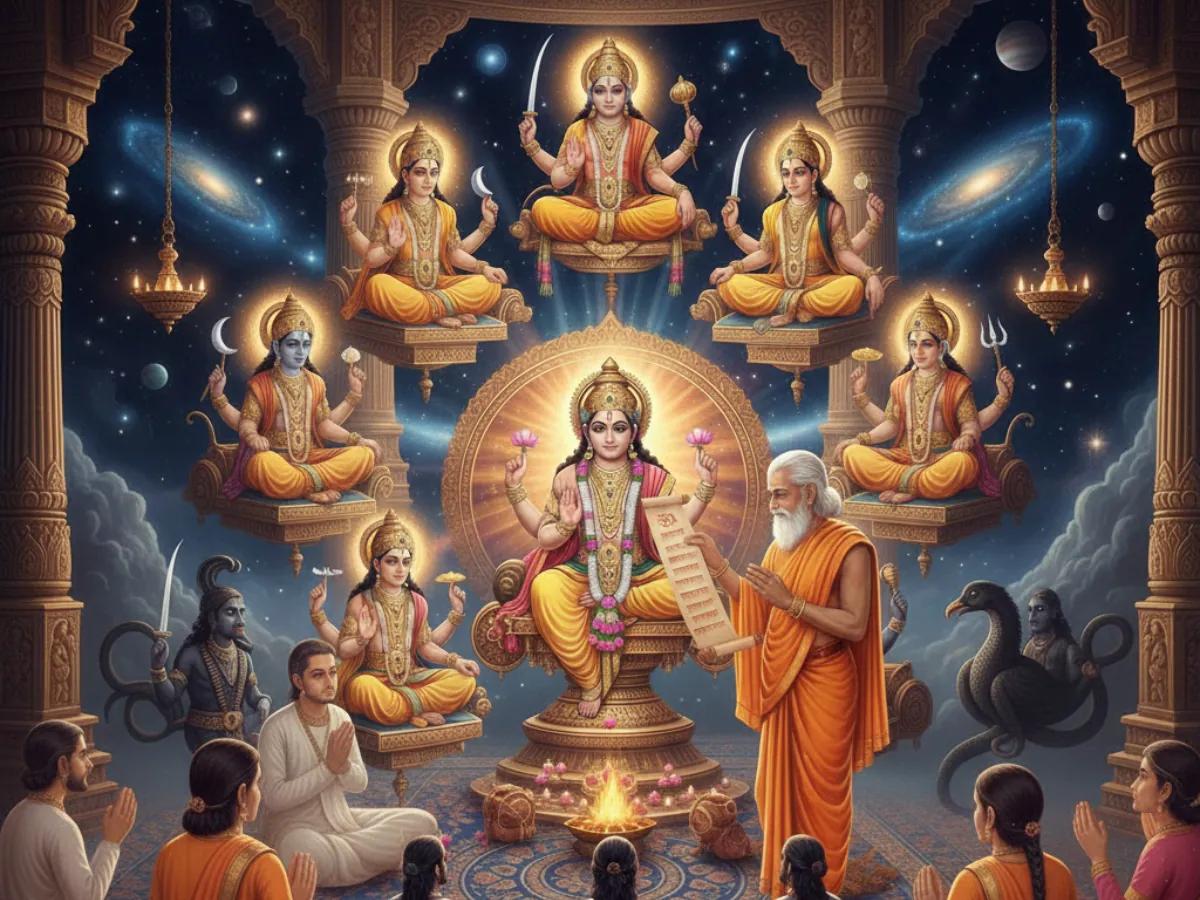
Lord Vishnu, or Narayan, is one of the Trimurti:
- Brahma creates,
- Vishnu (Narayan) preserves,
- Shiva dissolves.
Together they form the pulse of the universe. Among Vishnu’s many incarnations Rama, Krishna, Narasimha Krishna is said to be the full manifestation of that divine energy.
The Power of Worship and the Thursday Ritual
Thursday the Guruvara is especially sacred for Narayan devotees. Waking early during Brahma Muhurta (before sunrise), bathing, and chanting his mantras at dawn invites both Vishnu’s protection and Lakshmi’s abundance.
Even simple lines like “Om Namo Bhagavate Vasudevaya” can shift the energy around your home. It’s not about long rituals it’s about presence. A mind that bows sincerely is already halfway to peace.
How to Chant the Narayan Mantra
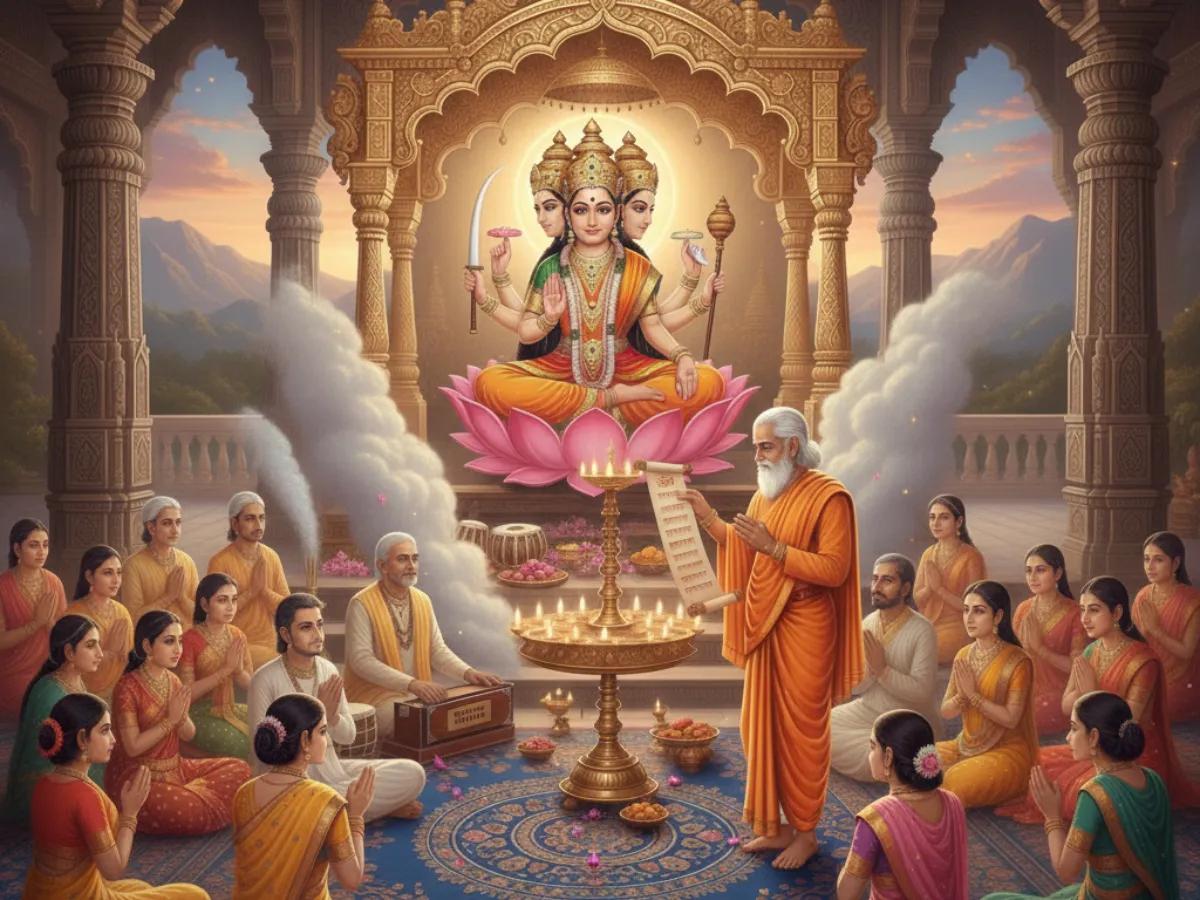
If you’re planning to chant the mantra formally, here’s a simple way to honor the tradition:
- Purify yourself: Take a bath and wear clean yellow clothes.
- Offer to the sun: Face east at sunrise. Offer water mixed with a pinch of turmeric while chanting “Om Namo Bhagavate Vasudevaya.”
- Prepare the altar: Spread a yellow cloth in the northeast corner (Ishan Kon) of your home.
- Invite Narayan: Place his idol or image, bathe it gently, offer yellow flowers, sweets, and sandalwood paste.
- Light a ghee lamp and incense.
- Chant softly, steadily, using a Tulsi or sandalwood mala each repetition a wave of gratitude rising and falling.
Benefits of Chanting the Narayan Mantra
- Invites divine grace, along with Goddess Lakshmi’s prosperity
- Removes financial hurdles and emotional heaviness
- Heals marital and relational difficulties
- Clears negativity and ensures success in endeavors
- Brings inner balance, devotion, and spiritual strength
But most importantly, chanting reconnects you to that quiet center that stays unshaken no matter what life brings.
Gentle Guidelines
- Avoid heavy or non-vegetarian food before chanting.
- Don’t offer unsuitable flowers like datura, semal, or akouva.
- Steer clear of tamasic substances (alcohol, overindulgence, anger).
- Pronounce the mantra clearly but don’t worry about sounding perfect; sincerity matters more.
- Maintain purity of mind and speech, and if you can, observe celibacy while in practice.
In the End
The name Narayan isn’t just for worship it’s a way of steadying your spirit. Repeat it when life feels uncertain. Whisper it between breaths when the world goes quiet.
Because in that sound Na-ra-yan lies the promise that you’re never alone.
Find refuge, peace, and protection in Lord Narayan’s grace. Explore authentic Narayan Mantra and Vishnu puja on Tirth.com.