It usually starts without warning.
One moment, the day still feels busy. The next, the light shifts. The heat eases. Someone lights a lamp near the river. And just like that, Ayodhya begins to slow down.
This is evening bhakti in Ayodhya. Not an event you attend, but a mood you step into. The city doesn’t announce it. It just softens.
You feel it in the way people walk. In how conversations drop a notch. In the quiet confidence with which devotion takes over public space.
Evening Bhakti in Ayodhya Begins With Temple Rituals
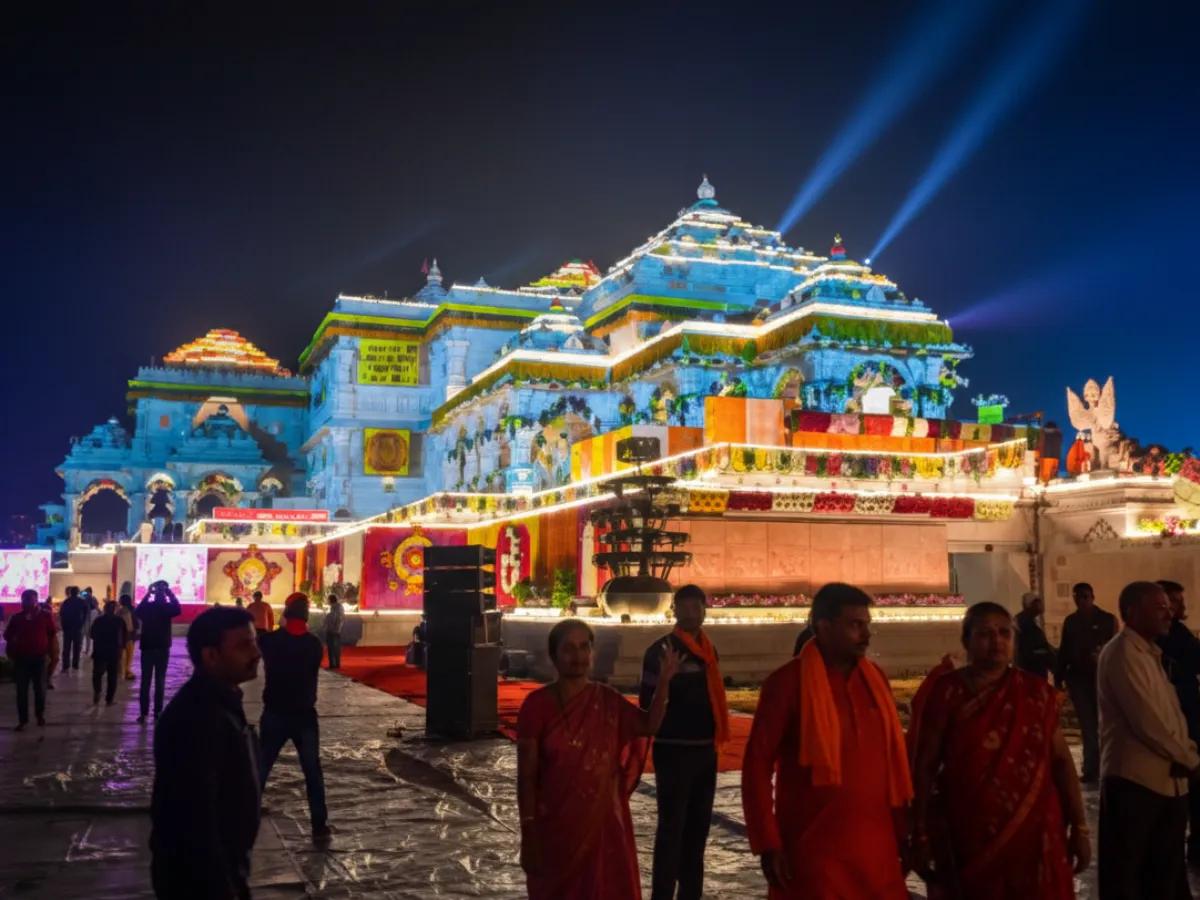
Everything in Ayodhya still starts with the temple. Even the evening.
According to the Shri Ram Janmbhoomi Teerth Kshetra trust, the Ram Mandir observes Sandhya Aarti around 07:00 PM, followed later by Shayan Aarti at 09:30 PM. These timings aren’t casual suggestions. They are boundaries. Markers.
During Sandhya Aarti, the doors may close briefly. It’s not inconvenience. It’s intention. A reminder that some moments are meant to be inward, not observed.
By the time Shayan Aarti is over, the temple rests. And somehow, the whole city seems to accept that cue.
Ayodhya Evening Devotion Moves Toward the Sarayu
Once temple rituals wind down, ayodhya evening devotion begins to drift.
Not rush. Drift.
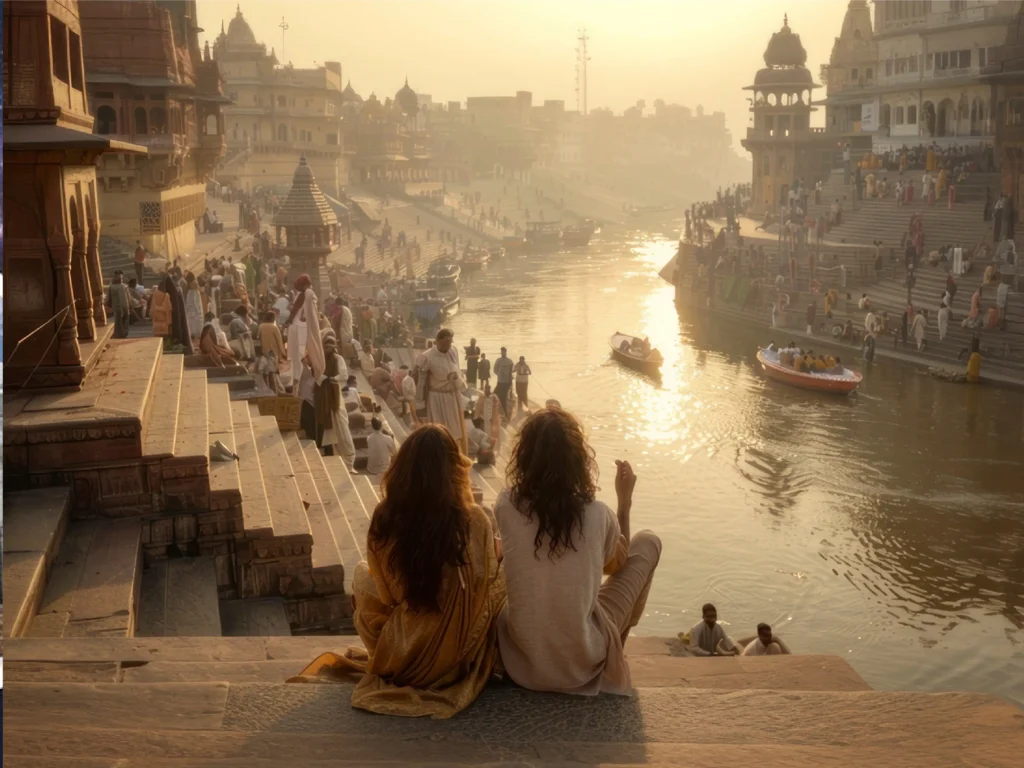
People naturally start walking toward the Sarayu. Toward Ram Ki Paidi. No one directs them. No signboard tells them to go. It’s habit. Memory. Something older than schedules.
You’ll see families, elderly couples, solo pilgrims. Some carry flowers. Some carry nothing at all. They sit by the water, light lamps, fold hands. Or don’t. Just being there seems enough.
Spiritual Evenings Ayodhya and the Role of Ram Ki Paidi
If mornings belong to sanctums, spiritual evenings ayodhya belong to the ghats.
Ram Ki Paidi, described by Incredible India and the district administration as a sacred Sarayu riverfront, becomes the heart of it all. During Deepotsav, it glows with countless diyas. On ordinary days, the scale is smaller. The feeling is the same.
Steps filled with quiet bodies. Lamps reflecting on water. A kind of collective stillness that doesn’t need explanation.
You don’t rush here. You sit. You wait. You watch the river do what it’s always done.
Bhajan Kirtan Culture During Ayodhya Evenings
Sometimes, the quiet breaks. Gently.
During festivals like Deepotsav, verified reports describe organised bhajan kirtan culture, with artists from across India performing devotional music at Ram Ki Paidi. Harmoniums. Cymbals. Voices rising together.
On regular evenings, it’s simpler. A small group singing. Someone joining halfway. Someone else just listening from a distance.
No stage. No spotlight. Just bhakti finding its voice when it needs to.
Ram Bhajan Culture and Collective Participation
What defines ram bhajan culture here is not performance, but participation.
Even during large scale events like the Sarayu Maha Aarti, where thousands take part together, the mood stays restrained. Devotional. Grounded.
And on quieter nights, it’s even more obvious. People don’t wait to be invited. If a bhajan starts, they join. If it stops, silence takes over without complaint.
There’s no audience in Ayodhya evenings. Only participants. Some active. Some quiet. All included.
Devotional Evenings India and Ayodhya’s Scale
Across India, devotional evenings often gather around temples or satsangs. Ayodhya follows that pattern, but stretches it outward.
Verified reports confirm that during Deepotsav, over 26.17 lakh diyas were lit along the Sarayu, a scale recognised by Guinness World Records. It’s enormous. Almost unreal.
And yet, once the lamps are lit, once the rituals end, the city doesn’t cling to the noise. It lets go.
That ability to expand and then return to calm is what makes Ayodhya different.
Ayodhya Night Spirituality and Light
Ayodhya night spirituality is not loud. It’s luminous.
Times of India reports mention themed lighting along major routes and the riverfront during festivals. Even then, the emphasis is visual, not auditory.
On regular nights, lighting stays simple. Enough to see. Enough to feel safe. Not enough to distract.
The lamps matter more than the lights. Always have.
Temple Evening Culture and Closing of the Day
The temple evening culture here understands closure.
When Shayan Aarti ends around 09:30 PM, it’s not just a ritual. It’s a signal. The deity rests. So should the city.
Shops begin to close. Streets thin out. Conversations fade. There’s no nightlife in the usual sense. And no one seems to miss it.
Ayodhya treats rest as part of devotion.
Evening Bhakti in Ayodhya During Festivals
During Deepotsav, evening bhakti in Ayodhya becomes city wide.
UP Tourism press releases describe diya lighting across 56 ghats, mass aartis, and large scale devotional gatherings. Infrastructure like the spectator gallery at Ram Ki Paidi, built to seat nearly 20,000 devotees, supports this safely.
Multiple verified reports confirm these arrangements. But what’s striking isn’t the scale. It’s the discipline. Even with lakhs present, the tone stays devotional.
The city knows how to hold crowds without losing itself.
How Infrastructure Supports Evening Devotion
Ministry of Tourism documents list Ramayana Circuit and Spiritual Circuit projects under Swadesh Darshan, supporting pilgrimage infrastructure in Uttar Pradesh.
In Ayodhya, this shows up quietly. Better ghats. Safer steps. Improved lighting. Seating that lets people stay longer without discomfort.
Infrastructure here doesn’t demand attention. It simply makes devotion easier.
What Travellers Should Know About Ayodhya Evenings
Evenings in Ayodhya ask something of visitors.
- Patience.
- Slowness.
- A willingness to sit without agenda.
Darshan is best planned earlier in the evening. River time comes later. Shops close early. Noise is limited.
If you try to rush Ayodhya evenings, you’ll miss them. If you slow down, they meet you halfway.
Why Evening Bhakti Matters for Pilgrims
For many pilgrims, evening bhakti becomes the moment they remember most.
Mornings feel disciplined. Afternoons feel practical. Evenings feel shared.
This is when strangers sit side by side without speaking. When devotion stops being something you do and becomes something you’re inside.
Understanding evening bhakti in Ayodhya helps pilgrims experience the city not just through rituals, but through atmosphere.
Why Tirth Highlights Evening Bhakti Experiences
At Tirth.com, we believe pilgrimage is about rhythm.
Evening bhakti represents Ayodhya at its most open. No queues. No pressure. Just space.
Highlighting evening experiences encourages travellers to stay longer, move slower, and engage more deeply. It aligns with mindful travel, not hurried darshan.
Conclusion: When Ayodhya Softens Into Devotion
As night settles in, Ayodhya doesn’t grow louder.
It grows quieter.
Lamps flicker. The Sarayu holds their reflection. Temples close gently. The city exhales, like it’s done this a thousand times before.
This is evening bhakti in Ayodhya. Not dramatic. Not demanding. Just devotion easing into night.
And if you’re still there when the lamps burn low, you realise something simple and true.
In Ayodhya, faith doesn’t chase attention. It waits.
Experience the tranquil essence of evening bhakti and cultural practices in Ayodhya. Tirth.com