On this page9 sections
- What does Tulsi stand for in a Hindu home?
- Why is there a Tulsi in so many Hindu homes?
- Does every house need a Tulsi?
- What does daily care of a Tulsi involve?
- Where do families differ on Tulsi customs?
- How do you take a leaf, and what happens when the plant dries?
- When is the Tulsi wedding kept?
- Frequently asked questions
- Continue on Tirth
- Sources and review
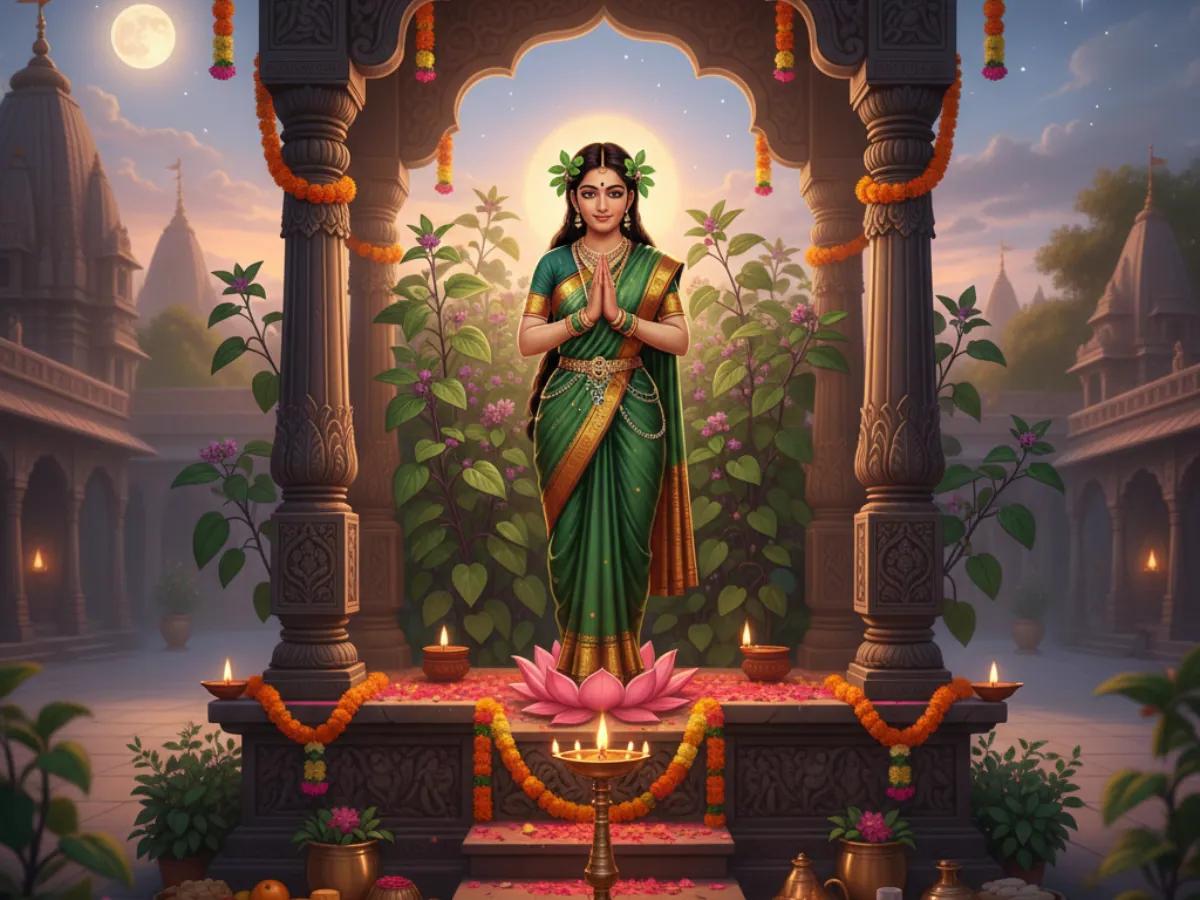
The plant it honours, in many Hindu homes, is Tulsi. To read the Tulsi meaning you have to know who she is to the family: Hindus revere her as a form of Maa Lakshmi, the consort of Bhagwan Vishnu, Deity page on Tirth . Vaishnavas hold her especially sacred.
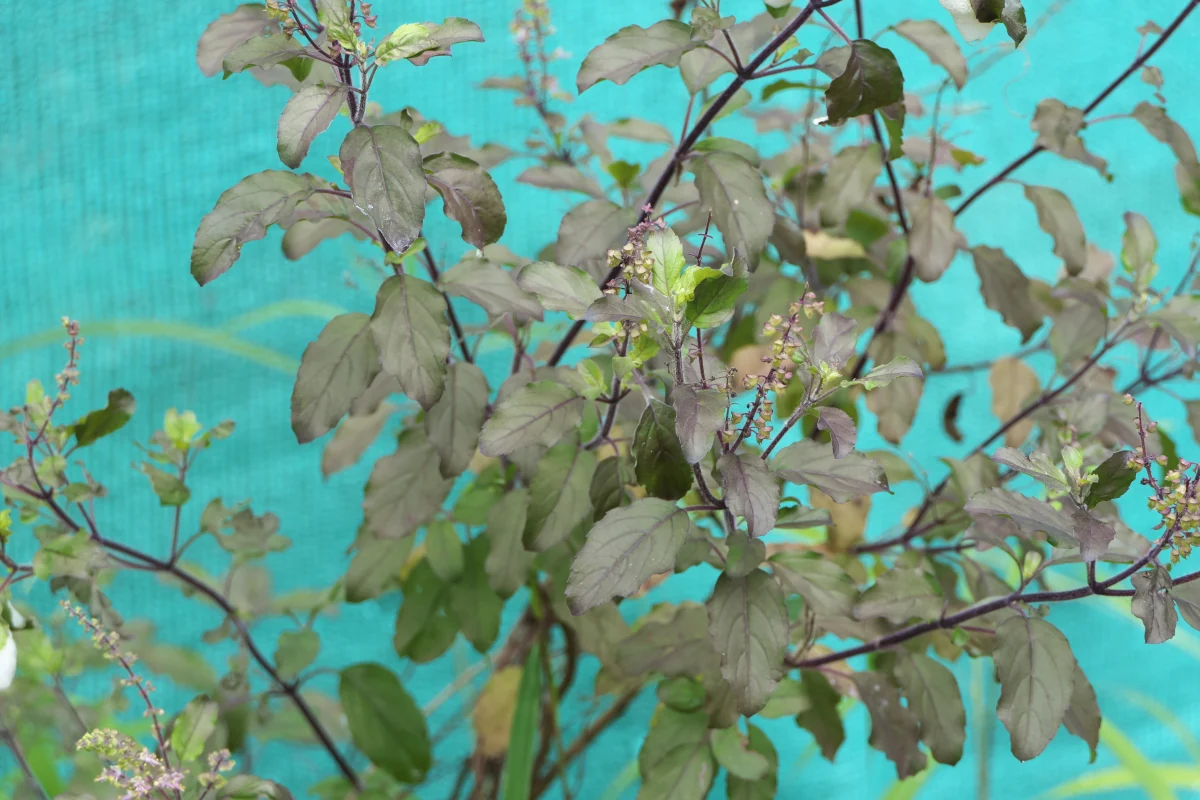
Ocimum tenuiflorum is the name a botanist uses. It is an aromatic perennial in the mint family, 30 to 60 cm tall, known as holy basil abroad. India has three common kinds, and they differ in colour. Rama Tulsi carries broad, bright green leaves. Purplish-green leaves mark Krishna Tulsi, also called Shyama, and it is especially sacred to Bhagwan Krishna because the colour resembles his complexion. The third kind, Vana Tulsi, is a wild type. Anyone looking for words to say for Maa Lakshmi will find the Lakshmi mantras on Tirth.
In short
To read the Tulsi meaning you have to know who she is to the family: Hindus revere her as a form of Maa Lakshmi, the consort of Bhagwan Vishnu, Deity page on Tirth. Vaishnavas hold her especially sacred. Ocimum tenuiflorum is the name a botanist uses.
What does Tulsi stand for in a Hindu home?
Nearness to Bhagwan Vishnu. Her Sanskrit names say so without any commentary: Haripriya means dear to Hari, and Vishnu Vallabha means beloved of Vishnu. For a picture, turn to the Srimad Bhagavatam, Canto 3, chapter 15, verse 19. Fragrant flowers like mandara, kunda, campaka and parijata honour the Tulsi there, and the verse says Bhagwan Vishnu gives her special preference and adorns himself with her leaves.
Bhagwan Krishna, it is said, hangs a garland of Tulsi leaves and flowers at his neck. Offerings to Bhagwan Vishnu and his forms carry her leaves, and garlands are strung from them as well. One Gaudiya Vaishnava math goes further and offers even cooked food with a leaf.
One traditional prayer enlarges her far past a single plant. Brahma is set in her branches. The holy places and the Ganga lie in her roots, and every deity is in her stem and leaves, while the Vedas sit in her upper branches.
Why is there a Tulsi in so many Hindu homes?
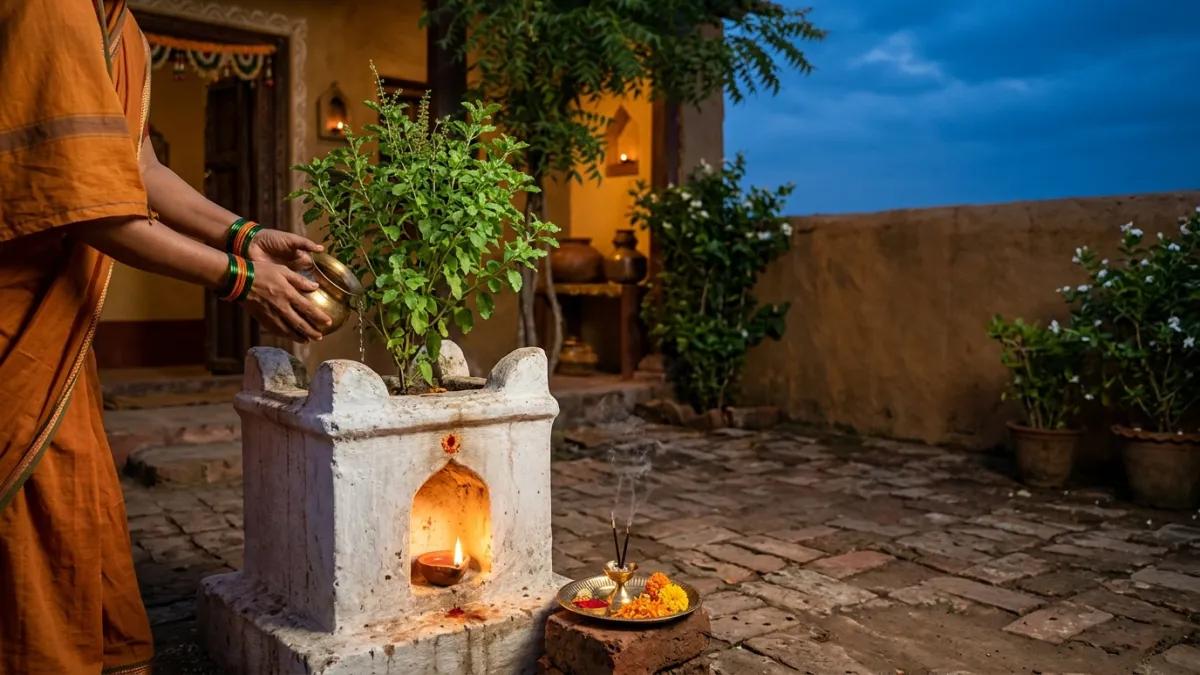
Courtyards are where she traditionally lives, often in a raised planter called the Vrindavan or tulsi chaura, a cuboid of stone or brick set in the middle of the courtyard or in front of the house. Many homes leave its daily tending to the women of the household.
Caring for her and watering her every day, the tradition holds, earns the grace of Bhagwan Vishnu, even with no formal worship. Tended every day, she is part of the household.
Does every house need a Tulsi?
One Gaudiya Vaishnava math keeps the answer simple. A Tulsi belongs in every house, since she is considered its proprietor. She need not be installed the way a Deity is. Another account holds that a house with a Tulsi may be considered a place of pilgrimage.
What does daily care of a Tulsi involve?
Four small acts: water, a lamp, flowers, a round of the plant. Many homes keep them. Lineages differ in how they do them, and some homes give Tuesdays and Fridays special weight.
One Gaudiya Vaishnava math names the manjaris, the soft, seedless flower spikes, as especially dear to Bhagwan Krishna.
Wondering what to say at the plant? Start with the Tulsi mantra. A hymn made in her praise also exists, and Tirth gives it verse by verse as the Tulsi Chalisa with line by line meaning.
Where do families differ on Tulsi customs?
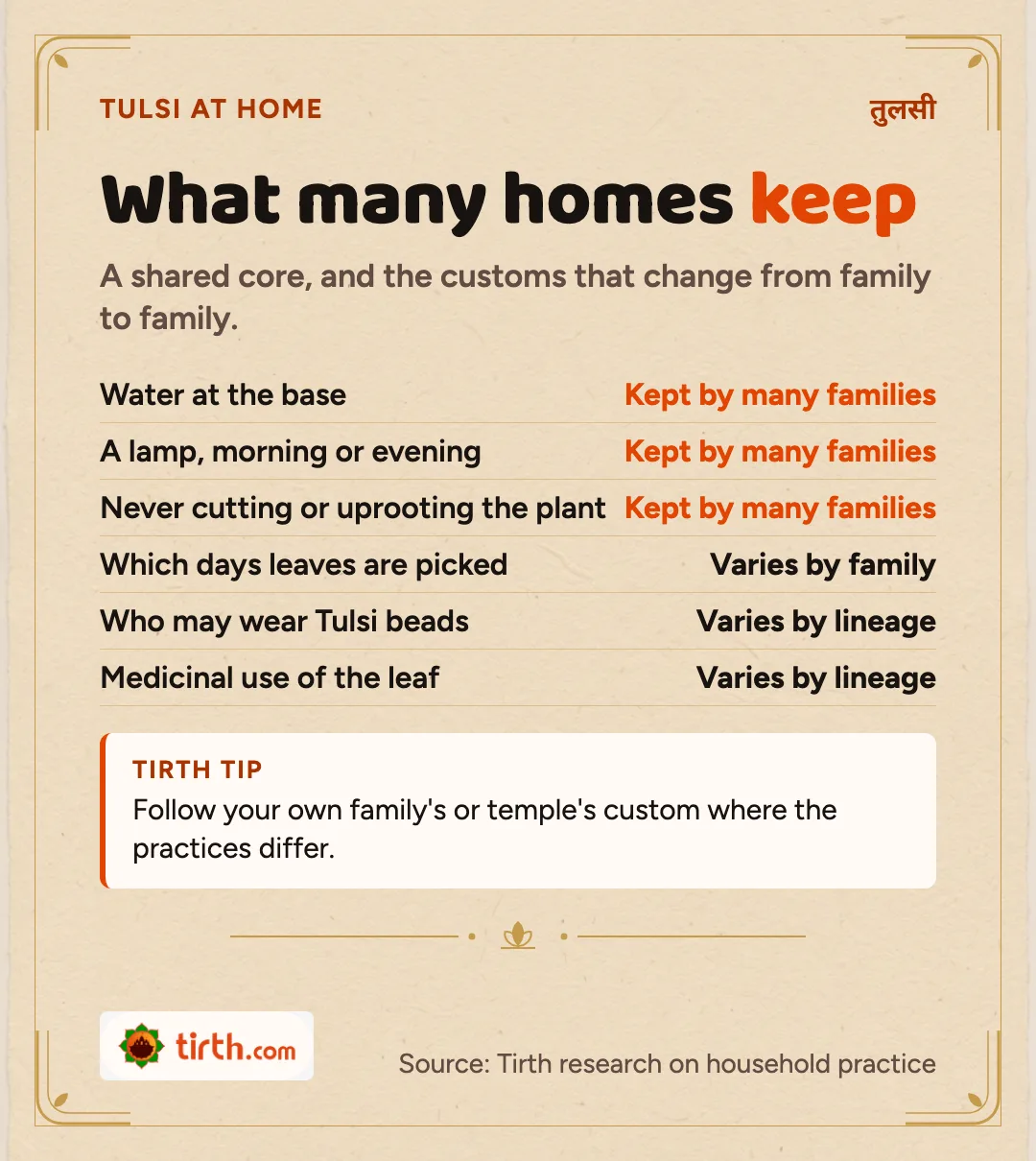
Whatever else divides them, many families keep three things alike: water, a lamp and no cutting. Beyond those, page after page offers its own rule as if no other were ever heard of.
| Question | One Gaudiya Vaishnava math | Other common guidance |
|---|---|---|
| When to pick leaves | Ekadashi or Dashami yes, Dvadashi no, never at night | Not on Ekadashi, Sundays, after sunset or during eclipses |
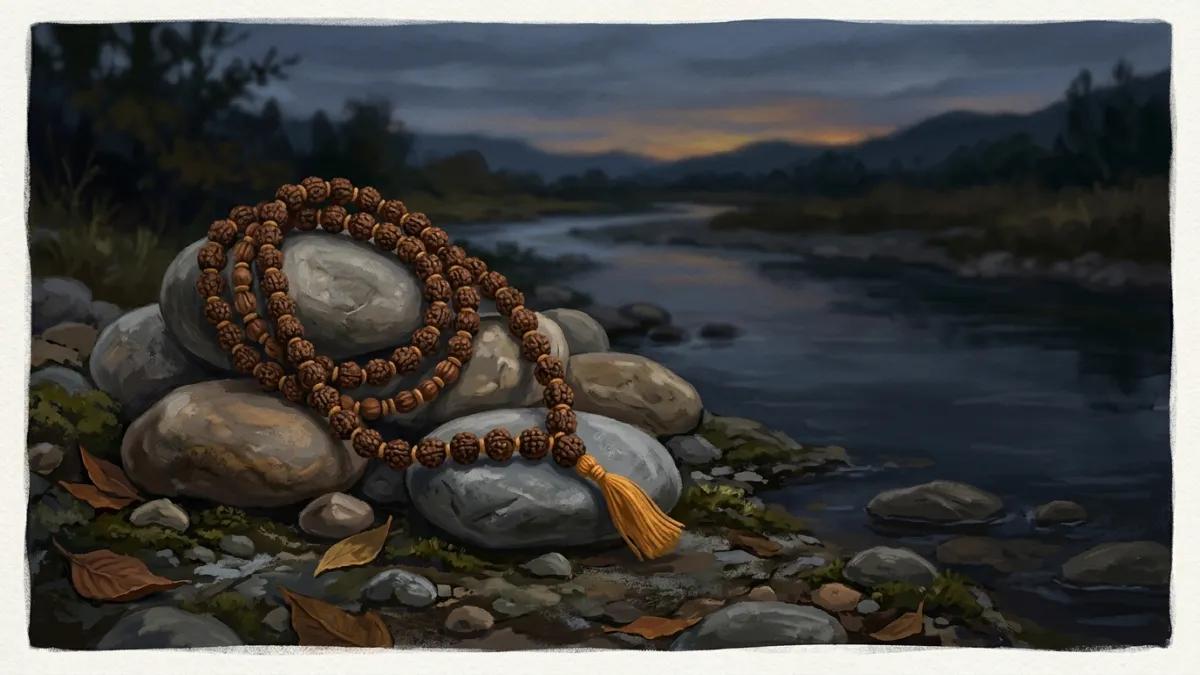
| Beads of Tulsi | Anyone may wear neck beads, initiated or not | Beads of stem or root mark initiation for Vaishnavas |
| Leaves as medicine | Not used as medicine | Used in Ayurvedic and Siddha practice |
Look at the first row. Two rules on picking leaves, and no single home can obey both. Ask the eldest person in the house, or your Pandit or Purohit, and then do what your own family or temple does. Ekadashi 2026 has the dates if you need them for the pick.
Medicine? Ask a qualified Ayurvedic practitioner first.
How do you take a leaf, and what happens when the plant dries?
The math from the table above wants care before a single leaf is taken, and it sets out how: you bow, ask the Tulsi’s permission, and reach first for leaves that have fallen or died. Never cut the plant. Never prune it for looks. A branch blocking the entrance can be tied back.
Other households share part of this. A prayer asking forgiveness may be said before picking, and tipping waste water near the plant is traditionally taboo. A withered Tulsi does not, by tradition, leave with the household rubbish; water receives it. Uprooting or cutting her is traditionally avoided as well.
When is the Tulsi wedding kept?
Tulasi Vivah, the ceremonial wedding of the plant to Bhagwan Vishnu, falls between Prabodhini Ekadashi and Kartika Purnima. For Delhi, the Tirth Spiritual Calendar gives Saturday, 21 November 2026. Some families keep another day within that window, so check your own city under Tulasi Vivah in the Tirth Spiritual Calendar.
At home the plant is the bride, and a Shaligram stone or an image of Bhagwan Vishnu or Bhagwan Krishna usually takes the groom’s place. The rite is mostly performed by women.
Frequently asked questions
Hindus revere Tulsi as a form of Maa Lakshmi, the consort of Bhagwan Vishnu. Vaishnavas hold her especially sacred. Her names Haripriya (dear to Hari) and Vishnu Vallabha (beloved of Vishnu) point the same way.
Yes, as Hindus revere her. Vaishnavas hold her especially sacred.
Her leaves go into offerings to Bhagwan Vishnu and his forms, and Bhagwan Krishna is said to wear a garland of Tulsi leaves and flowers. Part of the reason is the belief that she is a form of his consort.
Families differ. Where many household guides rule out Ekadashi and Sundays, one math allows Ekadashi or Dashami and not Dvadashi. Your own family or temple’s custom is the one to follow.
A dried Tulsi traditionally does not go in the bin. Give her to water.
Vaishnavas take beads of Tulsi stem or root as the mark of initiation. Yet one Gaudiya Vaishnava math says that anyone, initiated or not, may wear neck beads.
Continue on Tirth
- Tirth Spiritual Calendar festivals, Spiritual Calendar on Tirth, for Tulasi Vivah in your city.
- Tulsi Chalisa with line by line meaning.
- The Tulsi mantra.
- Kartika Mahatmya stories.