It usually begins quietly.
Not with drums or loudspeakers, but with a softer kind of morning. The air feels a little lighter. Winter hasn’t left yet, not really, but it loosens its grip just enough for you to notice. Someone opens a cupboard and pulls out a yellow dupatta that hasn’t been worn since last year. Books are wiped clean with the corner of a cloth. A diya is placed carefully, not hurriedly.
That’s how Vasant Panchami 2026 arrives.
This year, Vasant Panchami will be observed on Friday, 23 January 2026. But like most festivals rooted in learning and faith, the date is only the beginning of the story.
Vasant Panchami 2026 Date and Panchami Tithi Details
Let’s get the practical question out of the way first, because everyone asks it.
Vasant Panchami 2026 falls on 23 January.
The festival is observed on Shukla Paksha Panchami of the Magh month. The Panchami tithi begins in the early hours of the morning and continues till after midnight the next day. Since the Panchami tithi is present during the daytime on 23 January, that is the day Vasant Panchami is celebrated across India.
This answers all those very human, very common questions:
when basant panchami
2026 vasant panchami kab hai
basant panchmi kitni tarikh ko hai
Friday. Twenty third. That’s the day.
When Basant Panchami Is Observed and What the Day Feels Like
Vasant Panchami isn’t a festival that rushes you.
There’s no urgency to finish everything before a certain hour, no sense of missing out if you’re not loud enough or dressed grand enough. Instead, the day settles in slowly.
In homes, Saraswati Puja happens in the morning. In schools and colleges, desks turn into altars. In temples, you’ll see students standing quietly, books pressed to their chests, eyes lowered, not nervous, just attentive.
Across regions, the core remains the same. This is a day for learning, for beginnings that don’t shout but stay.
When Is Saraswati Puja in 2026
People often ask this separately, even though the answer is simple.
Saraswati Puja in 2026 will be performed on Vasant Panchami, 23 January 2026.
The preferred puja window falls in the morning to noon hours, roughly between early morning and midday. Many families choose this time because it aligns naturally with the rhythm of the day. Children are fresh. Minds are calmer. The house is still quiet.
You’ll notice something else too. On Saraswati Puja, there’s less talking. Less scrolling. More stillness. And that feels intentional.
Vasant Panchami Festival and Its Meaning
The vasant panchami festival is often explained as the arrival of spring. That’s true. But it’s only part of it.
It’s also about clarity.
Goddess Saraswati is worshipped as the source of knowledge, music, art, and discipline. On this day, people don’t ask for wealth or victory. They ask for understanding. For focus. For the ability to learn without ego.
That’s why the festival feels especially close to students, teachers, artists, writers, musicians. Anyone who works with the mind or the hands or both.
Yellow Color and Its Place on Vasant Panchami 2026
If you step outside on Vasant Panchami 2026, you’ll notice yellow everywhere.
Yellow sarees. Yellow kurtas. Yellow flowers. Even yellow food.
There’s a reason for that.
Yellow represents warmth in the cold Magh month. It mirrors mustard fields beginning to bloom. It signals optimism without being loud about it. Government cultural references clearly describe yellow as the colour of the day, and people follow it instinctively, not as a rule, but as a feeling.
If you’re travelling on this day, wearing yellow helps you blend right in. It’s simple. It’s respectful. And somehow, it always feels right.
Saraswati Worship Practices on Vasant Panchami
Saraswati Puja is not complicated.
Books are placed near the deity. Musical instruments are rested gently, not played. Pens are kept aside. In some homes, children don’t study until after the puja. Not as a restriction, but as a mark of respect.
The puja itself is quiet. Aarti. Flowers. A prayer that’s more about intention than words.
And then, the day continues. Slowly.
Vasant Panchami 2026 for Pilgrims and Travellers
For pilgrims, Vasant Panchami 2026 carries additional meaning.
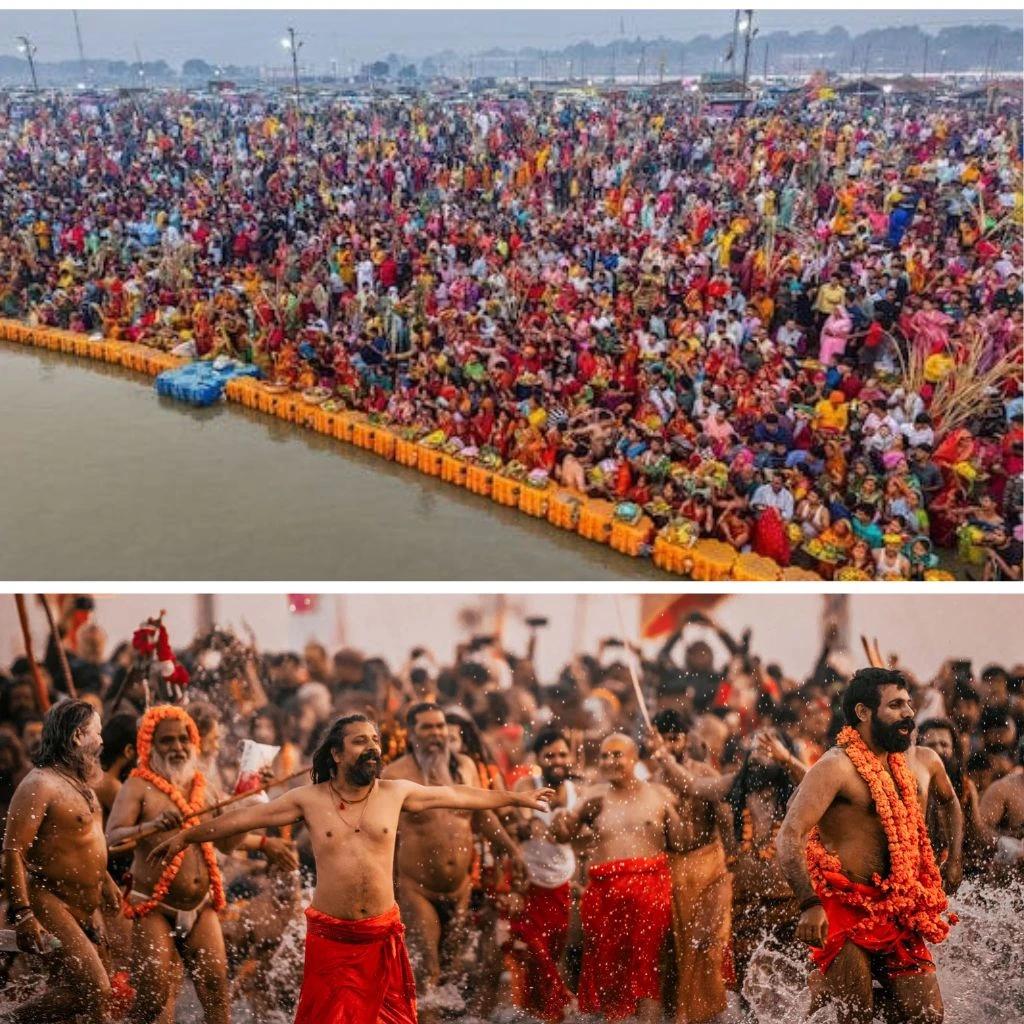
It is counted among auspicious days during large pilgrimage periods, especially in places connected to major religious gatherings. On such days, footfall increases. Temples open early. Movement begins before sunrise.
If you’re travelling:
Start early in the day
Expect gentle crowds, not chaotic ones
Carry something yellow if possible
Plan temple visits in the morning hours
The day rewards those who don’t rush it.
Why Vasant Panchami Matters to Students and Families
This festival belongs to children in a quiet way.
Parents involve them not through instructions, but through example. Cleaning books together. Sitting for aarti. Explaining, gently, why learning deserves reverence.
For students, the day carries a subtle reset. A reminder that knowledge isn’t just something to chase, but something to honour.
And that stays with them, long after the flowers are removed.
Regional Names and Observance of Vasant Panchami
You might hear different names depending on where you are.
Some call it Saraswati Panchami. Others say Shri Panchami. The names change, but the practice doesn’t.
Everywhere, the focus remains on Saraswati worship, yellow symbolism, and the arrival of spring.
That’s why searches vary, but the festival stays the same.
A Simple Vasant Panchami 2026 Festival Guide
If this is your first time observing the festival, don’t overthink it.
Wake up early. Wear clean clothes. Yellow, if you have it.
Perform Saraswati Puja in the morning. Keep the day light. Avoid excess. Visit a temple if you’re travelling. Spend some time in silence. Even a few minutes count.
Vasant Panchami doesn’t demand much. It just asks you to pay attention.
Final Reflection
Vasant Panchami 2026 won’t announce itself loudly.
It will arrive like a soft page turn. Like winter easing, just slightly. Like knowledge being treated not as a tool, but as a companion.
Yellow clothes will fade by evening. Flowers will wilt. Books will return to shelves.
But the feeling stays.
And maybe that’s the point.
Contextual information on Vasant Panchami 2026 celebrations can be found on Tirth .com.