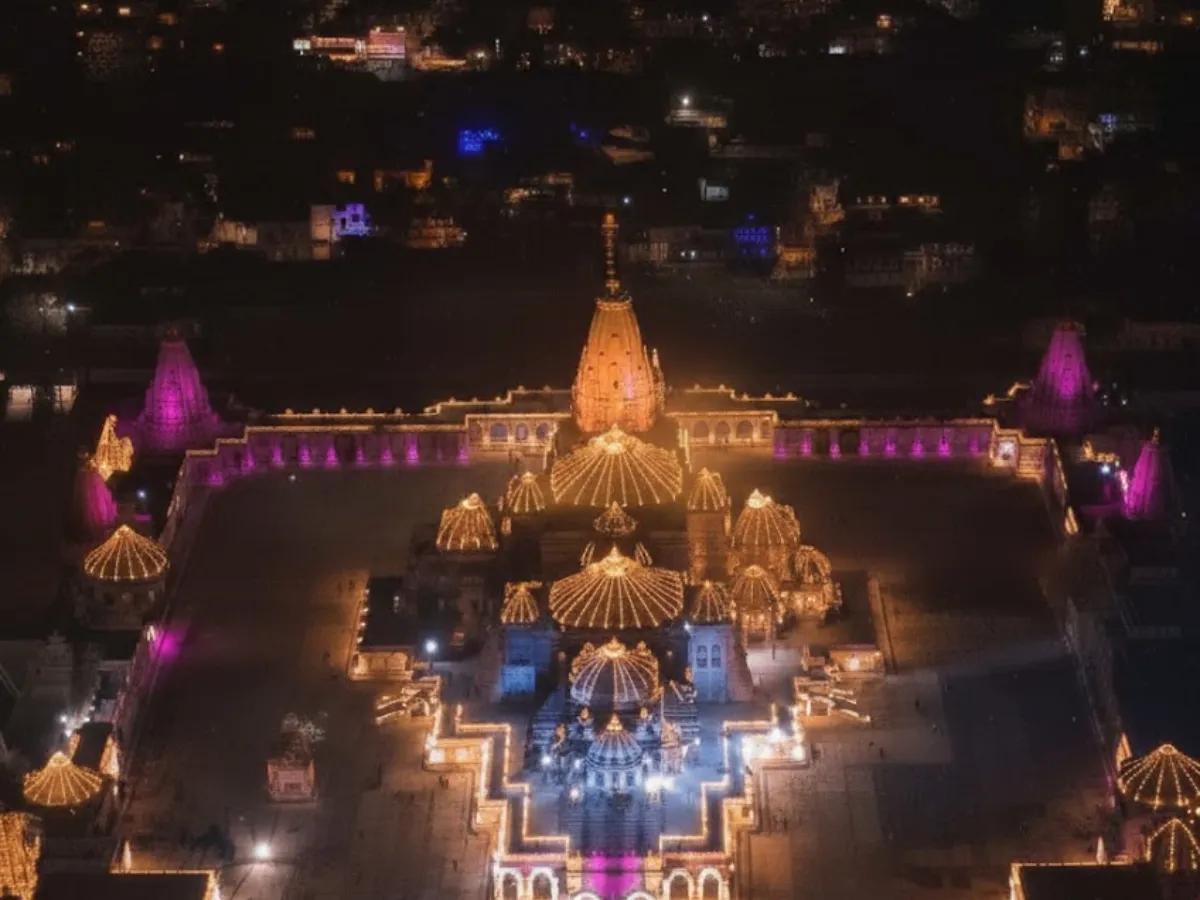
Ayodhya night spirituality begins quietly. Not with a sound, but with a pause.
As evening slips into night, the city seems to loosen its grip on the day. The footsteps slow. Temple bells fade into distance. Conversations become softer, almost instinctively. What remains is not emptiness, but a presence that feels deeper than noise.
Most pilgrims know Ayodhya through daylight. Morning darshan lines. Afternoon heat. Evening crowds moving with purpose. But when night arrives, Ayodhya reveals a different face. One that asks nothing. One that simply allows you to sit, breathe, and feel.
This is where ayodhya night spirituality lives. Not in grand rituals alone, but in the quiet moments that stay with you long after the journey ends.
Ayodhya Night Spirituality After Sunset and Temple Timings
There is a natural rhythm to Ayodhya’s evenings. According to the Shri Ram Janmabhoomi Teerth Kshetra Trust, evening darshan at the Ram Mandir concludes around 7:00 PM. The closing of the gates is not abrupt. It feels like a gentle signal that the pace is about to change.
Once darshan ends, the urgency of movement fades. There is no rush to reach the next shrine. No pressure to stand in another line. Instead, the city invites you to stay still.
For pilgrims who understand this rhythm, devotion after sunset becomes less about doing and more about being. The night does not offer more activities. It offers space.
Spiritual Silence Ayodhya and the Meaning of Mauna
Silence in Indian tradition is never accidental. Academic research on mauna, or sacred silence, describes it as an intentional spiritual state. Not a lack of expression, but a form of deep awareness.
This understanding helps explain why spiritual silence Ayodhya feels alive rather than hollow. As night falls, the city seems to enter this state naturally. Fewer sounds. Fewer instructions. Fewer expectations.
Nothing tells you to be quiet. Yet you become quiet.
The silence here does not feel forced. It feels shared. And that makes it powerful.
Peaceful Nights Ayodhya and the Changing City Rhythm
Official tourism guidance identifies October to March as the most comfortable period to visit Ayodhya. The evenings are cooler. The streets feel gentler. Even the air seems to carry less urgency.
Peaceful nights Ayodhya offers are shaped by this balance of climate, timing, and tradition. After sunset, once temple schedules conclude, the city gradually settles. Shops close. Groups thin. What remains are individuals walking slowly, often without destination.
This change in rhythm transforms the yatra itself. The journey no longer feels like a checklist. It feels like a conversation between the pilgrim and the place.
Ayodhya Night Spirituality Along the Saryu Ghats
The Saryu has always been central to Ayodhya’s spiritual life. At night, this connection deepens.
Ram ki Paidi, recognised by UP Tourism as a key spiritual landmark, takes on a quieter character after sunset. During festivals like Deepotsav, the ghats are illuminated with thousands of diyas. Verified reports speak of record numbers, coordinated lighting, and state supported celebrations that turn the riverfront into a glowing expanse.
But outside festival days, the magic is different.
A few lamps remain lit. Reflections move gently on the water. The steps are open, unguarded, and welcoming. This is when many pilgrims sit without agenda. No prayers spoken aloud. No photos taken. Just presence.
This contrast defines ayodhya spiritual calm. The city knows when to shine, and when to rest.
Devotion After Sunset Beyond Temple Rituals
When temples close, devotion does not end. It simply changes shape.
Devotion after sunset in Ayodhya often looks unremarkable from the outside. Someone standing quietly by the river. A family sitting without speaking. A pilgrim walking slowly through a lit corridor, not rushing anywhere.
Research on silence practices shows that quiet, when intentional, deepens reflection. Ayodhya offers this environment without effort. You do not need guidance. You do not need instruction.
The night itself becomes the teacher.
Ayodhya Energy and Night Meditation Atmosphere
Ayodhya’s energy does not fade at night. It becomes subtler, like a low flame instead of a blaze.
Studies on silence based practices show measurable effects on the mind even in controlled spaces. In Ayodhya, this effect feels amplified. The geography, the stories, the collective memory all contribute.
The night meditation atmosphere here is not organised. It is felt. Reduced noise. Soft lighting. Fewer distractions. Together, they create conditions where the mind naturally turns inward.
For many pilgrims, this is when Ayodhya finally speaks.
Sacred Silence Hinduism and Ayodhya’s Living Example
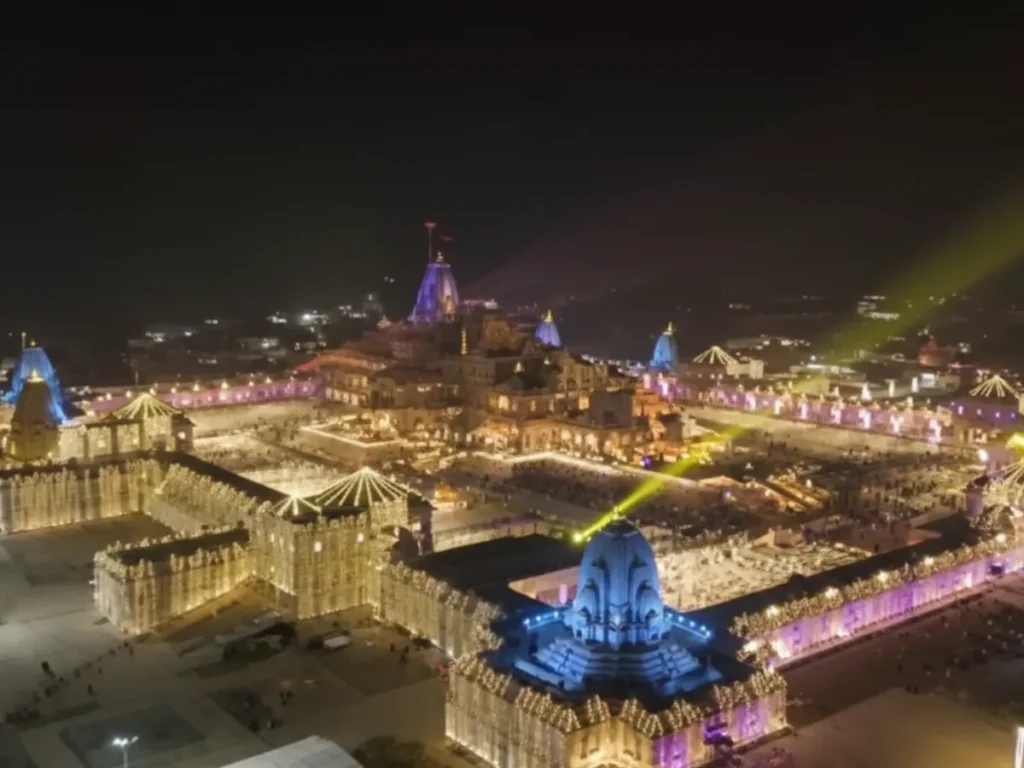
Hindu philosophy has long treated silence as sacred. Scholars describe it not as withdrawal, but as communion.
Ayodhya embodies this idea effortlessly. There are no signs asking for silence. No rules enforcing stillness. Yet, the city seems to guide everyone toward it.
This is what makes Ayodhya feel alive rather than preserved. It is not performing spirituality. It is living it.
Practical Guidance for Experiencing Ayodhya at Night
While night spirituality is deeply rewarding, practical awareness remains important.
Verified international travel advisories recommend avoiding unnecessary movement late at night. Pilgrims are advised to stay within well lit, active areas such as temple corridors and riverfront zones.
UP Tourism’s promotion of homestays and B&Bs in Ayodhya supports safe overnight stays close to spiritual centres. Choosing accommodation nearby allows pilgrims to experience night calm without extended travel.
At Tirth.com, we encourage evenings that are slow, intentional, and restful. Ayodhya does not demand exploration at night. It offers reflection.
Digital Devotion and Ayodhya Night Participation
Not every devotee can be physically present. Recognising this, verified initiatives like Ek Diya Ram Ke Naam allow pilgrims to participate digitally during Deepotsav evenings.
These efforts acknowledge that devotion after sunset can extend beyond geography. The night connection is emotional, not merely physical.
Even from afar, the feeling of participation remains real.
Experiencing Ayodhya Night Spirituality
At Tirth.com, we believe pilgrimage is as much about emotional rhythm as it is about logistics.
Ayodhya night spirituality fits naturally into this philosophy. We encourage pilgrims to leave space in their plans. Space to sit. Space to listen. Space to feel.
Not every meaningful moment needs an itinerary.
Sometimes, the quiet is the journey.
What to Plan Next Month for Night Devotees
- Design days around early darshan. Finish temple visits before evening and let the night be unstructured.
- Choose dates intentionally. Decide whether you want festival illumination or ordinary quiet. Both are powerful in different ways.
- Stay close, move less. Overnight stays near temples allow you to experience peaceful nights Ayodhya offers without fatigue.