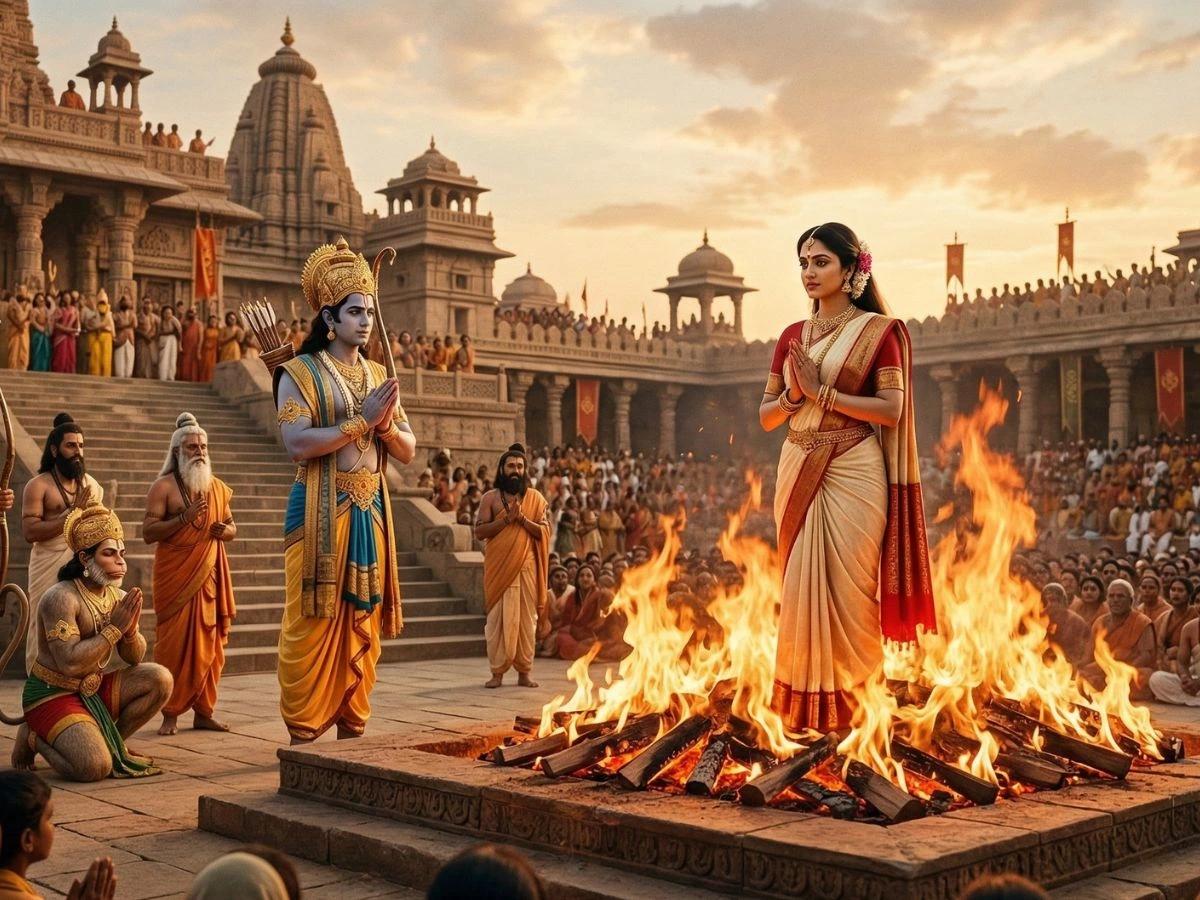
Ram bhakti lifestyle in Ayodhya is not something you switch on during aarti and switch off after darshan. It flows quietly through the day, from the first light of morning to the deep calm of night.
In Ayodhya, devotion does not always announce itself. It moves softly through daily routines. Through the way people wake up, the way they walk, the way they speak, and even the way they rest.
To live here, even briefly, is to understand that Ram bhakti is not limited to prayer. It is a way of arranging life.
This is the rhythm of ram bhakti lifestyle. Not extraordinary. Not dramatic. Just steady, lived devotion.
Ram Bhakti Lifestyle at Dawn and the Beginning of the Day
Morning in Ayodhya arrives gently. Before the city fully wakes, temple bells begin to ring, not loudly, but steadily. The air carries the faint sound of shlokas, often coming from homes rather than loudspeakers.
For many residents, daily Ram bhakti begins before sunrise. The day starts with a bath, clean clothes, and a small prayer space at home. A framed image of Ram. A diya. Sometimes only silence.
This early routine reflects spiritual discipline Ayodhya is known for. Devotion is placed first, before work, before travel, before conversation.
Pilgrims who wake early often notice this quiet devotion around them. It is not performed for others. It is personal.
Daily Ram Bhakti Through Simple Morning Rituals
Ram bhakti routine in Ayodhya does not require elaborate ceremonies every day. For many, devotion means reciting Ram Naam softly, reading a few lines from Ramcharitmanas, or simply sitting still for a few minutes.
This is hindu devotional lifestyle at its most grounded. Devotion fits into daily life rather than interrupting it.
Morning walks often lead pilgrims toward temple corridors or ghats. Not always for darshan, but for presence. Standing near sacred spaces becomes part of the routine, even when no ritual is taking place.
This quiet consistency is what shapes the bhakti way of life here.
Ram Devotion Culture in Daytime Ayodhya
As the day unfolds, Ayodhya becomes active. Shops open. Pilgrims arrive. Temple queues form. Yet even during busy hours, devotion remains woven into daily activity.
Shopkeepers pause briefly to fold hands when temple bells ring. Vendors speak Ram Naam casually, not ceremoniously. Conversations carry references to faith without effort.
This is ram devotion culture in practice. Faith is not separated from work. It moves alongside it.
For visitors, this creates a subtle shift. You are not just observing devotion. You are surrounded by it.
Devotional Living Beyond Temple Walls

One of the most striking aspects of devotional living in Ayodhya is that it does not depend entirely on temples.
Many locals may not visit a temple every single day. Yet their lives remain shaped by bhakti. Speech is careful. Actions are measured. Daily choices reflect restraint and gratitude.
This form of devotion is quiet but deep. It reflects an understanding that Ram bhakti is about character as much as prayer.
Pilgrims often feel this difference without being able to name it. The city feels slower, gentler, less hurried.
Spiritual Discipline Ayodhya Teaches Without Instructions
Ayodhya does not instruct you on discipline. It demonstrates it.
Meals are often simple. Days follow a steady rhythm. Excess is rare. This natural restraint forms the backbone of spiritual discipline Ayodhya represents.
Even during crowded periods, there is an unspoken order. People wait. People adjust. People make space.
For travellers, spending a full day here often changes how they move. You begin to walk slower. Speak less. Listen more.
This is the city teaching bhakti without words.
Afternoon Pauses and Quiet Ram Bhakti
Afternoons in Ayodhya are unhurried. Many temples reduce activity. Streets grow quieter. Homes rest.
This pause is also part of ram bhakti routine. Silence is not considered wasted time. It is a form of devotion.
Some pilgrims read. Some rest. Some sit near ghats without speaking. The city allows this slowing down without guilt.
In this stillness, daily Ram bhakti becomes less about action and more about awareness.
Evening Aarti and Collective Devotion
As the sun lowers, devotion becomes collective again. Evening aartis bring sound back into the city. Lamps are lit. Bells ring with intention.
Pilgrims gather not just to watch, but to participate. Even those unfamiliar with rituals find themselves folding hands instinctively.
This transition from quiet to sound reflects the balance of bhakti way of life. Silence and expression coexist.
Evening devotion is not rushed. It marks the closing of the day’s responsibilities and the return to surrender.
Ram Bhakti Lifestyle After Sunset
After temple darshans conclude, Ayodhya softens again.
Night brings back the calm that morning began with. Streets empty. Conversations fade. The Saryu reflects lamps and moonlight quietly.
This is where ram bhakti lifestyle feels most complete. Devotion without performance. Faith without instruction.
Many pilgrims describe this as the moment Ayodhya feels closest. No rituals to follow. No lines to stand in. Just presence.
Night Reflection and the Inner Bhakti Routine
Night in Ayodhya is not meant for movement. It is meant for reflection.
Homes settle early. Lamps remain lit quietly. The city seems to rest with intention.
Scholars describe silence in Hindu tradition as an active state. Ayodhya lives this truth every night.
This final phase of ram bhakti routine is inward. Gratitude for the day. Acceptance of what passed. Surrender to rest.
Living the Ram Bhakti Lifestyle as a Pilgrim
For pilgrims, living this lifestyle even briefly can be transformative.
It does not require imitation. It requires attention.
Wake early. Move slowly. Speak gently. Rest without guilt. Let devotion exist between activities, not only during them.
This is how hindu devotional lifestyle becomes lived experience rather than observation.
Experiencing Ram Bhakti Lifestyle with Tirth.com
At Tirth.com, we design pilgrimages that respect this rhythm.
We believe devotion is not something to schedule tightly. It needs breathing space.
Our Ayodhya experiences are built to support daily Ram bhakti, not overwhelm it. Morning calm. Balanced darshan. Evenings without pressure.
Because Ram bhakti is not about how much you do. It is about how you live while doing it.
What to Plan Next for Living Ram Bhakti in Ayodhya
• Plan full day stays, not rushed visits. Allow mornings and nights to unfold naturally.
• Choose accommodation close to temples. Less travel allows more stillness.
• Leave time unscheduled. Some of the most meaningful moments arrive unplanned.