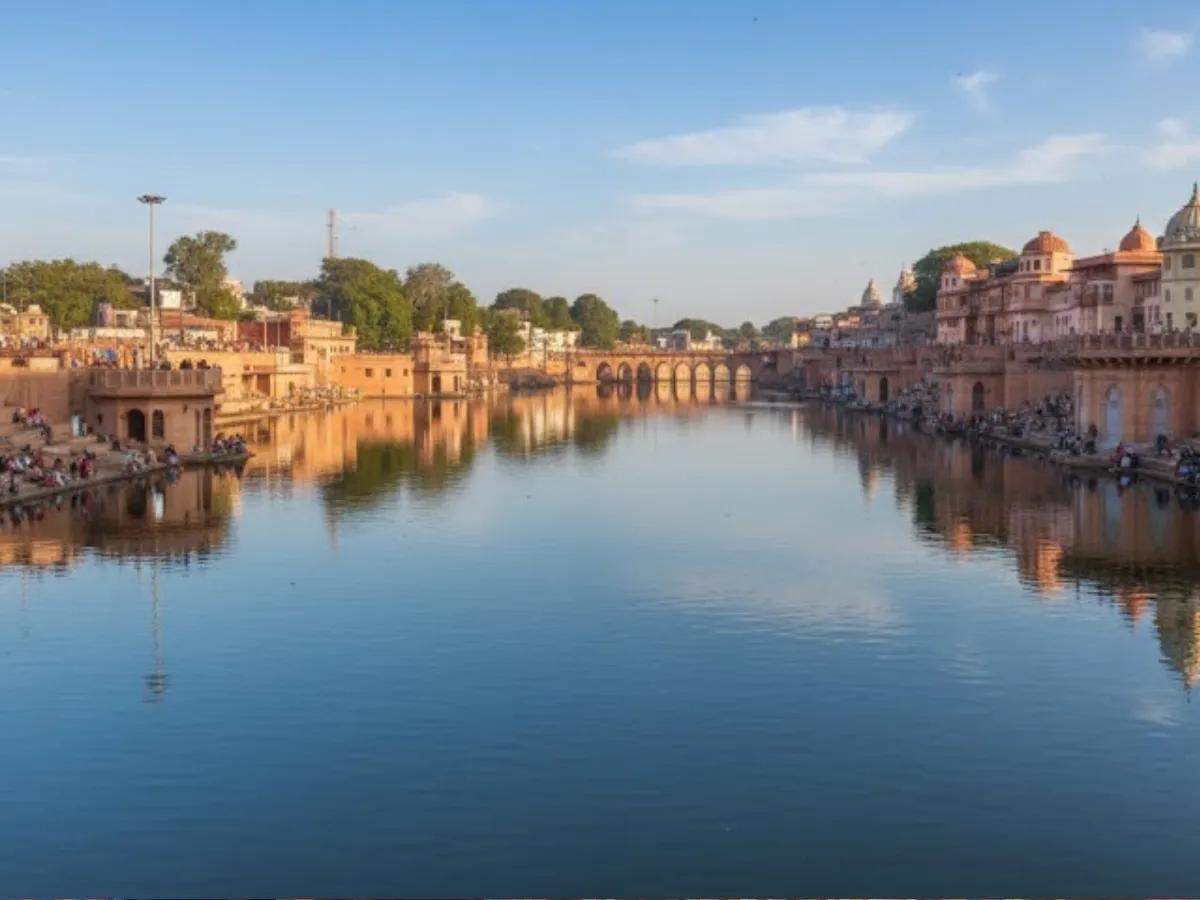
Some places don’t explain themselves.
They don’t put up boards saying this is important or please feel something here. You just arrive, stand still for a second longer than planned, and realise, okay, something is different.
That’s usually how people first sense the saryu river significance.
Not through a book. Not through a guide’s microphone. But through that quiet pause when the city loosens its grip and the river takes over.
Ayodhya doesn’t announce itself with noise. It settles into you slowly. And almost always, that settling begins near the water.
The saryu river significance isn’t locked inside scripture or temple walls. You see it in the way locals adjust their walking pace near the ghats. In how pilgrims lower their voices without being told. In the fact that people arrive here without a checklist, yet leave feeling like something was completed.
Official tourism descriptions say Ayodhya sits on the banks of the Saryu. That’s true, of course. Factually correct.
But emotionally? Ayodhya leans on the river.
For many travellers, the first instinct isn’t to rush to darshan. It’s to walk towards the water. To look. To stand. To breathe. Almost as if the body already knows where to go.
Saryu River Ayodhya: Geography That Shapes Devotion
The relationship between saryu river ayodhya isn’t decorative. It’s structural.
Ayodhya grew outward from the river. The ghats came first. The pathways followed. Temples rose inward, not the other way around. This order matters, even today.
Tourism platforms describe the city as resting on the eastern bank of the Saryu, but what they don’t fully say (though you feel it instantly) is how the river quietly directs movement. Where crowds gather. Where they disperse. Where people pause instead of push.
The river doesn’t just sit there. It guides.
Ayodhya River Culture Lives on the Ghats
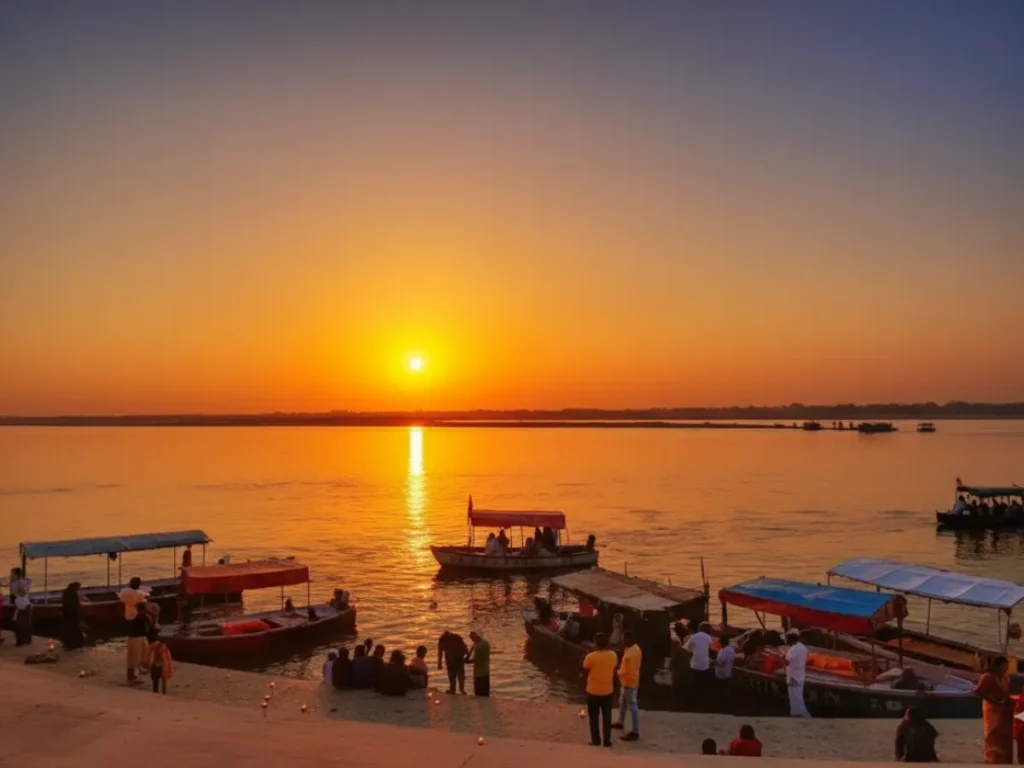
If you really want to understand ayodhya river culture, skip the hurry. Come to the ghats without a deadline.
Ram Ki Paidi and the Living Riverfront
District records describe Ram Ki Paidi as a series of ghats along the Saryu. That’s accurate. But what it doesn’t capture is the mood.
Early mornings feel hushed. Almost sleepy. Someone dips their hands in the water, someone else just watches the reflection ripple and break. No one rushes. No one explains.
There’s a long held belief that bathing here washes away sin. Some people come for that belief. Others just sit with their feet dangling in the water, unsure why they needed to come, but very sure they needed to stay.
Multiple Ghats, One Sacred Flow
Ayodhya isn’t built around a single river stop. Guptar Ghat, Lakshman Ghat, Ram Ki Paidi, each has its own memory, its own tone.
But the river stays the same.
People move between ghats slowly, often without planning. A little walk. A short pause. Another set of steps. It’s devotion without pressure, which is rare these days.
Saryu Spiritual Importance Beyond Personal Ritual
The saryu spiritual importance becomes clearest when devotion turns collective.
Not private prayer. Shared moments.
Government records speak of large aartis on the ghats of Mother Saryu, with hundreds of priests chanting together. Imagine that sound. The lamps. The wind off the river. The crowd holding its breath for a second longer than usual.
These aren’t casual gatherings. They’re organised, recognised, remembered.
The river doesn’t just witness devotion. It hosts it.
Ramayan Saryu River References and Belief Traditions
The ramayan saryu river connection lives mostly in belief, passed softly from person to person.
Cultural research speaks of the tradition that Lord Ram took jal samadhi in the Saryu. Whether one approaches this as history, faith, or something in between, the belief shapes behaviour.
People stand differently here. Quieter. Slower.
Many refer to the river as Saryu Maiya, not out of habit, but affection. Like speaking of an elder whose presence steadies you, even when they say nothing.
Sacred Rivers Hinduism and the Place of Saryu
In sacred rivers hinduism, rivers aren’t background elements. They’re participants.
National tourism platforms list Ayodhya among ancient cities shaped by holy rivers, and the Saryu fits naturally into that lineage. It carries ritual, memory, and continuity all at once.
When temple queues grow long, people drift back to the river. When darshan feels rushed, they return to the ghats. The Saryu absorbs what temples sometimes cannot.
Deepotsav and the Saryu River as Ayodhya’s Stage
If there’s one moment when the saryu river significance becomes impossible to miss, it’s Deepotsav.
The Riverfront as Festival Core
Official tourism pages confirm that Deepotsav unfolds along the Saryu ghats. And when it happens, the river doesn’t feel like a river anymore.
News reports speak of lakhs of diyas across dozens of ghats. What they don’t quite capture is the stillness between flickers of light. The reflections trembling on water. The silence that sneaks in between chants.
For a few hours, Ayodhya doesn’t feel like a city. It feels like a shared breath.
Record Scale Aartis and Recognition
Tourism press releases talk about records. World records. Numbers.
Fair enough.
But for pilgrims, the scale matters less than the feeling that the river has been remembered, honoured, returned to its rightful place at the centre.
Saryu Maiya Belief and Community Participation
The saryu maiya belief lives most honestly with those who spend their days by the river.
Recent reports mention efforts to recognise boatmen as cultural ambassadors. It makes sense. They know the river’s moods. When it’s calm. When it’s restless. When silence feels appropriate.
As tourism grows, these local voices keep the river from turning into a spectacle. They remind visitors how to approach with respect, not entitlement.
Practical Pilgrim Experience on the Saryu Riverfront
Devotion adapts. It always has.
Reports of floating bathing arrangements for elderly pilgrims show that the Saryu remains central, even as care and safety evolve.
For travellers, this means access without anxiety. Space without pressure.
Early mornings remain gentle. Evenings glow softly. And sitting quietly is never considered wasting time.
How Travellers Can Experience Saryu River Ayodhya Mindfully
A Saryu visit doesn’t need planning. That’s the strange beauty of it.
Ten minutes can feel like an hour. Or vice versa.
Walk along Ram Ki Paidi. Sit at Guptar Ghat. Watch the water during sunset without pulling out your phone immediately. These moments don’t shout their value, but they linger.
Most people don’t remember exact aarti timings years later. They remember how the river made them feel.
Why the Saryu River Is Called the Soul of Ayodhya
The saryu river significance reveals itself slowly, through repetition.
Every festival returns here. Every belief circles back. Every tired pilgrim finds rest by its edge.
Ayodhya’s temples rise upward. The river moves forward.
And somewhere between stillness and flow, the city finds its balance.
People come seeking darshan. They leave carrying silence.
And often, it’s the Saryu that gives them that gift.
Background information on the Saryu River in ayodhya and its religious importance is available on Tirth .com.